
 ← All stories
ARCHIVE FILE · Lost Places
Lost Places
01 / A burnt-out caravan
and the risk of falling
It is early morning when we set off. Fog hangs heavily over the fields as the sun slowly fights its way through the dense grey. In the distance, a tall, rusty chimney breaks the gloomy stillness — our destination is in sight. Entangled in brambles and dense undergrowth lies an abandoned industrial site that nature reclaimed long ago.
The first impression is eerie. Vegetation grows everywhere. It takes considerable effort to find a narrow path through the dense greenery. Between branches and moss, the first structures emerge — crumbling walls, rusty steel beams and concrete remains. What was once produced here is unclear. Too many traces are missing; too much time has passed.
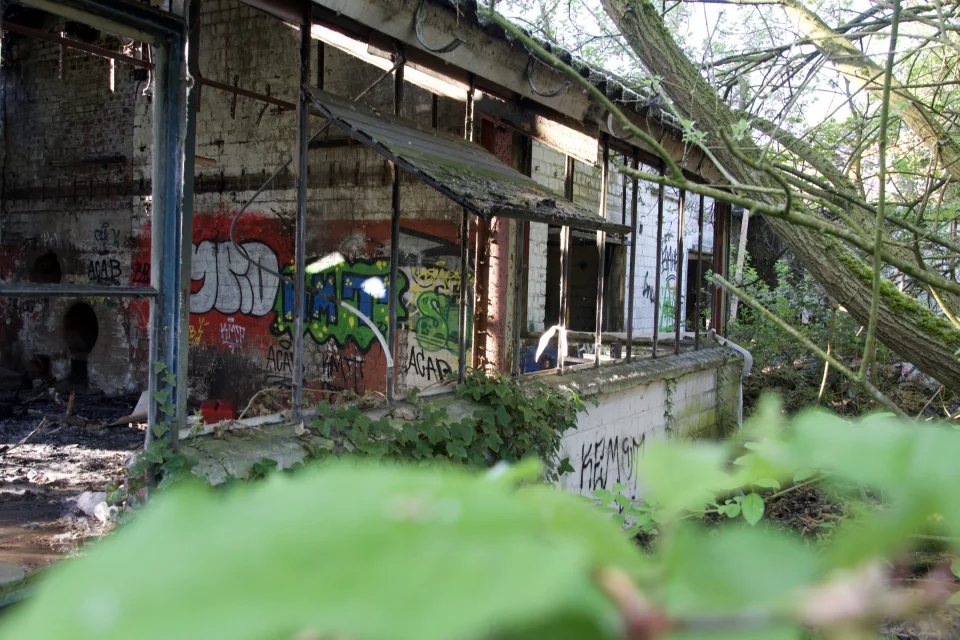
A concrete basin suggests that large tanks may once have stood here, but its precise function remains unclear. All that remains is the feeling that this place was once full of life, machinery and noise.
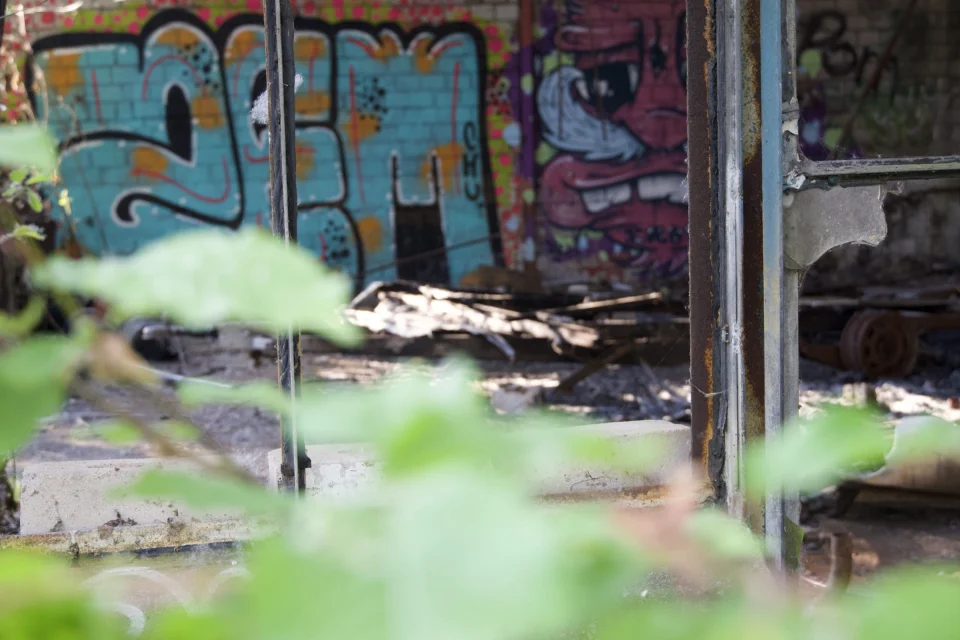
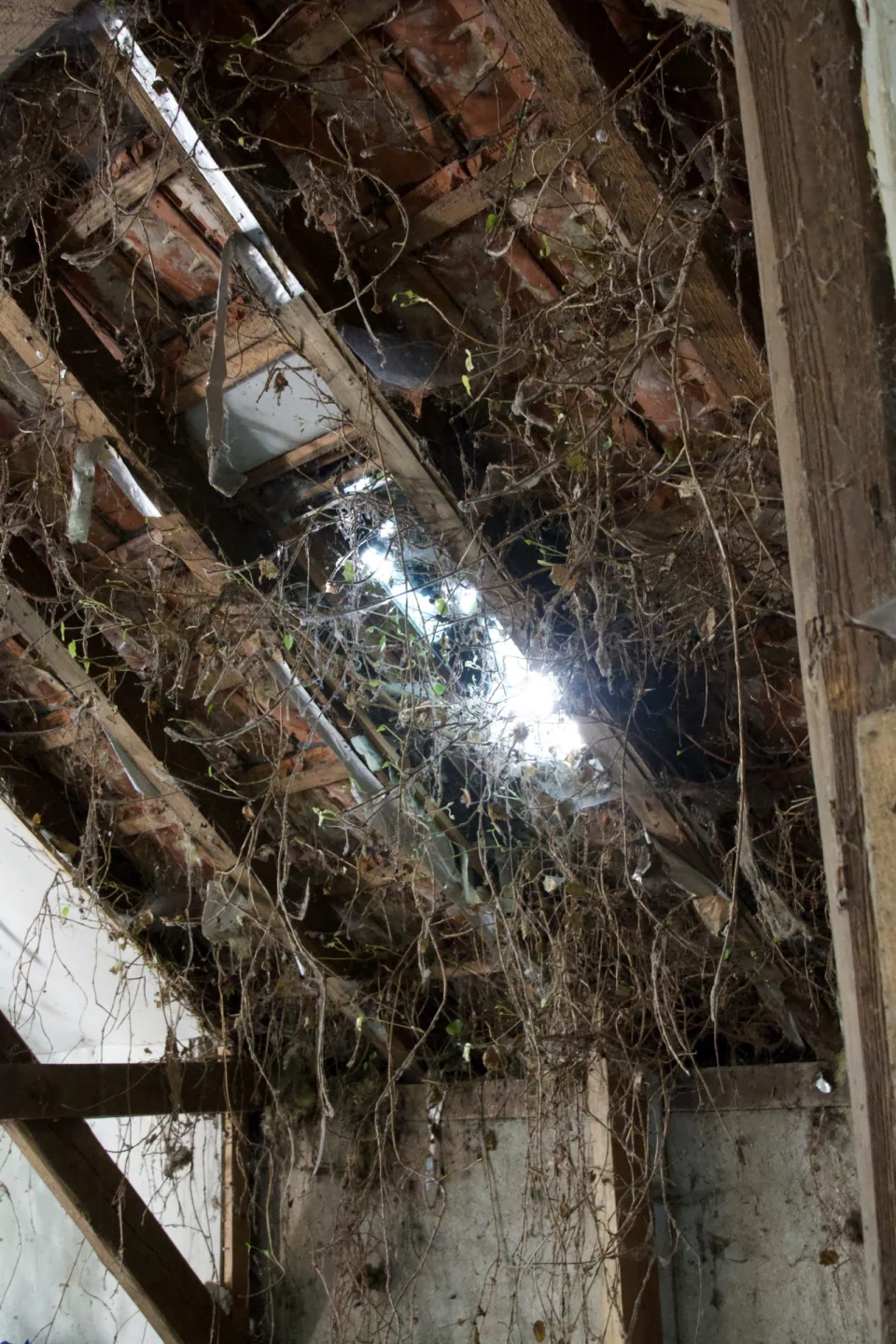
Beyond the basin stands a former workshop hall. Its roof has partly collapsed, and sunlight streams through gaping holes in the structure. The walls are covered with colourful, sometimes dark graffiti. In the middle of the hall stands the charred skeleton of an old caravan — only the rusty chassis is still recognisable. The interior has burnt out, a silent witness to past events.
Police tape flutters in the wind, partly weathered and partly removed. It shows that this place has long been regarded as a crime scene or a dangerous site.
A little further on are two garages. They too are empty, apart from a few abandoned canisters and an old, wobbly workbench. Time has left its mark here.
02 / FIELD NOTE
Forgotten in the undergrowth — the last traces of industry
The adjoining house is barely accessible. The wooden stairs into the cellar have collapsed; warning signs would be unnecessary — the danger is obvious. Upstairs there is nothing but emptiness. Crumbling plaster, smashed windows, slogans and drawings on the walls tell their own story. Every step is a risk.
At the edge of the site stands a large greenhouse. Or what is left of it. Shattered panes, rusty metal supports and a thick carpet of plants — nature reclaimed it long ago.
03 / Nice to Know
— Abandoned industrial sites
Abandoned industrial sites are more than ruins — they are silent witnesses to a bygone era. Many, such as the Hansa coking plant in Dortmund, are now industrial heritage sites offering an authentic glimpse into the industrial past. Urban exploration, or urbex, is dedicated to discovering such places, drawn by their decay, history and hidden beauty. But entering these sites is not always legal, as they are often privately owned and trespassing may result in fines. Nor should the dangers be underestimated: unstable roofs, falling debris and rotten floors can be life-threatening. At the same time, these abandoned places often reveal a fascinating phenomenon — nature reclaiming its space and creating unique, almost surreal scenes that are especially appealing to photographers.