Arriving where history becomes a landscape.
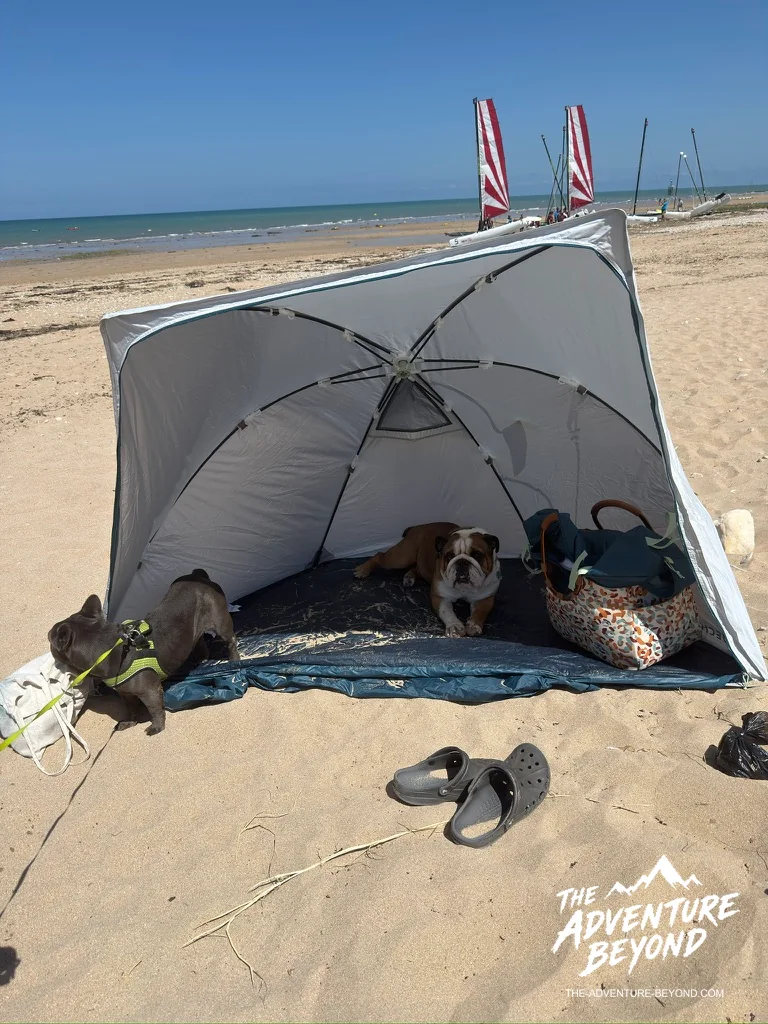
Our base was in Vierville-sur-Mer, right beside Omaha Beach. Arriving today, you initially see an almost perfect summer beach: sea, high cliffs, families, dogs and — when the wind is right — paragliders above the coast.
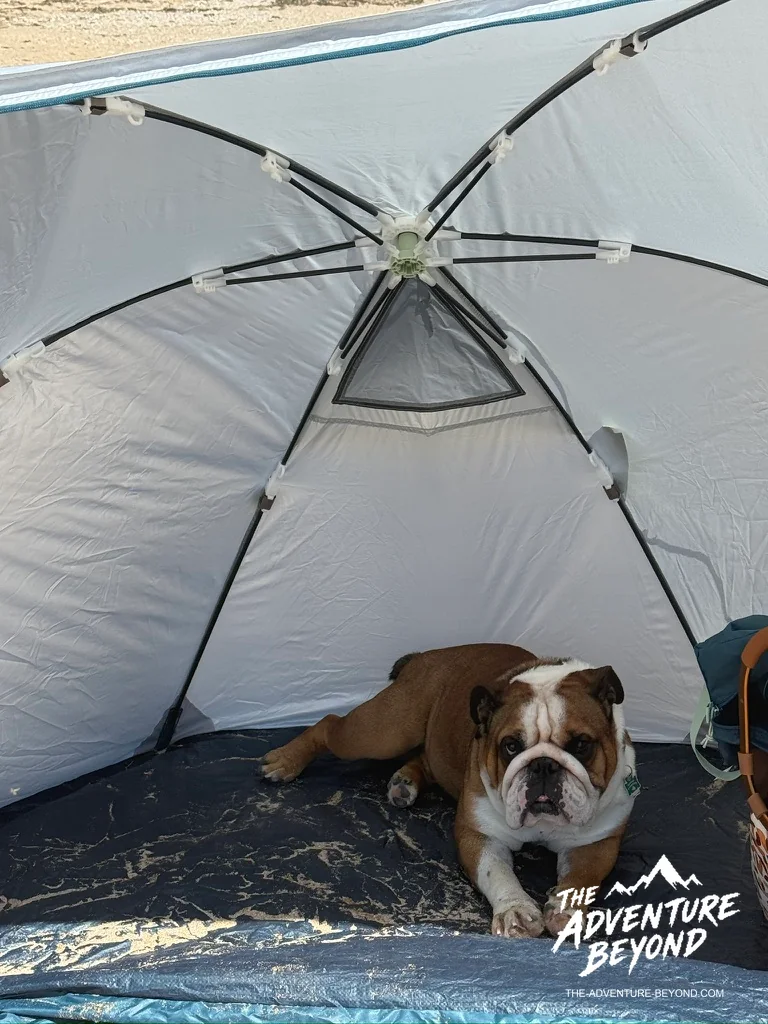
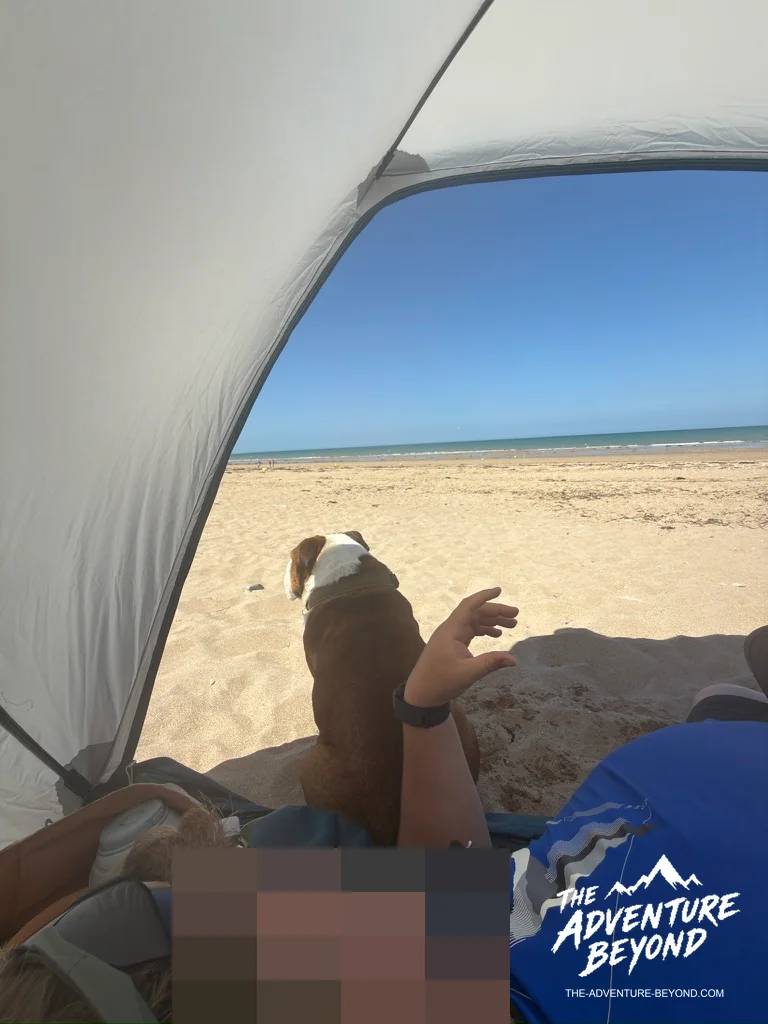
So we put up the beach shelter, settled Winston and Erna in the shade and took time to arrive. Winston stuck to his proven active-holiday approach: little movement, plenty of shade and something to eat in between.
Yet it was precisely those ordinary holiday moments that later made the place so powerful. American soldiers landed here on the morning of 6 June 1944. Seeing the exposed stretch all the way to the cliffs turns a historical event into a real, physical space.
 01
01You are not looking at a photograph. You are standing before the concrete.

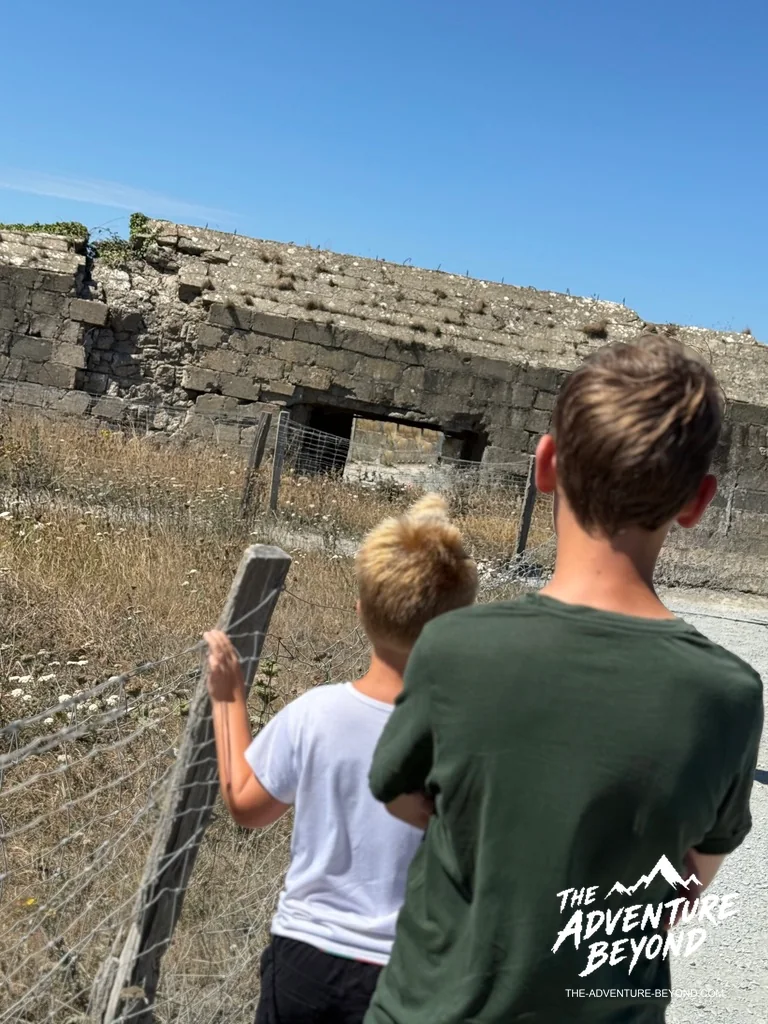
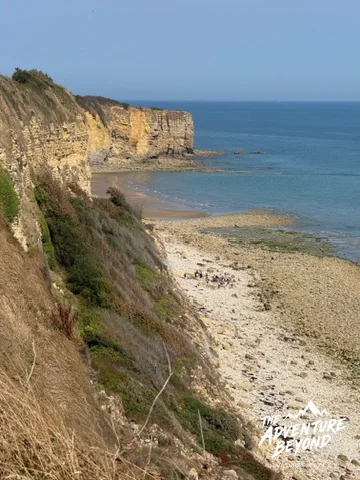
At first glance, Pointe du Hoc could simply be a spectacular viewpoint. Then you turn around: bomb craters, reinforcing steel, concrete remains and destroyed positions dominate the plateau.
On D-Day, American Rangers were tasked with neutralising the German gun positions here, which meant scaling the steep cliffs. Standing at the top and looking down gives some sense of the scale of that task. Walking among the remains with the children turned photographs and documentaries into an immediate experience.
Normandy is not a place you simply tick off a list.Here, past and present sometimes lie just a few steps apart.
 03
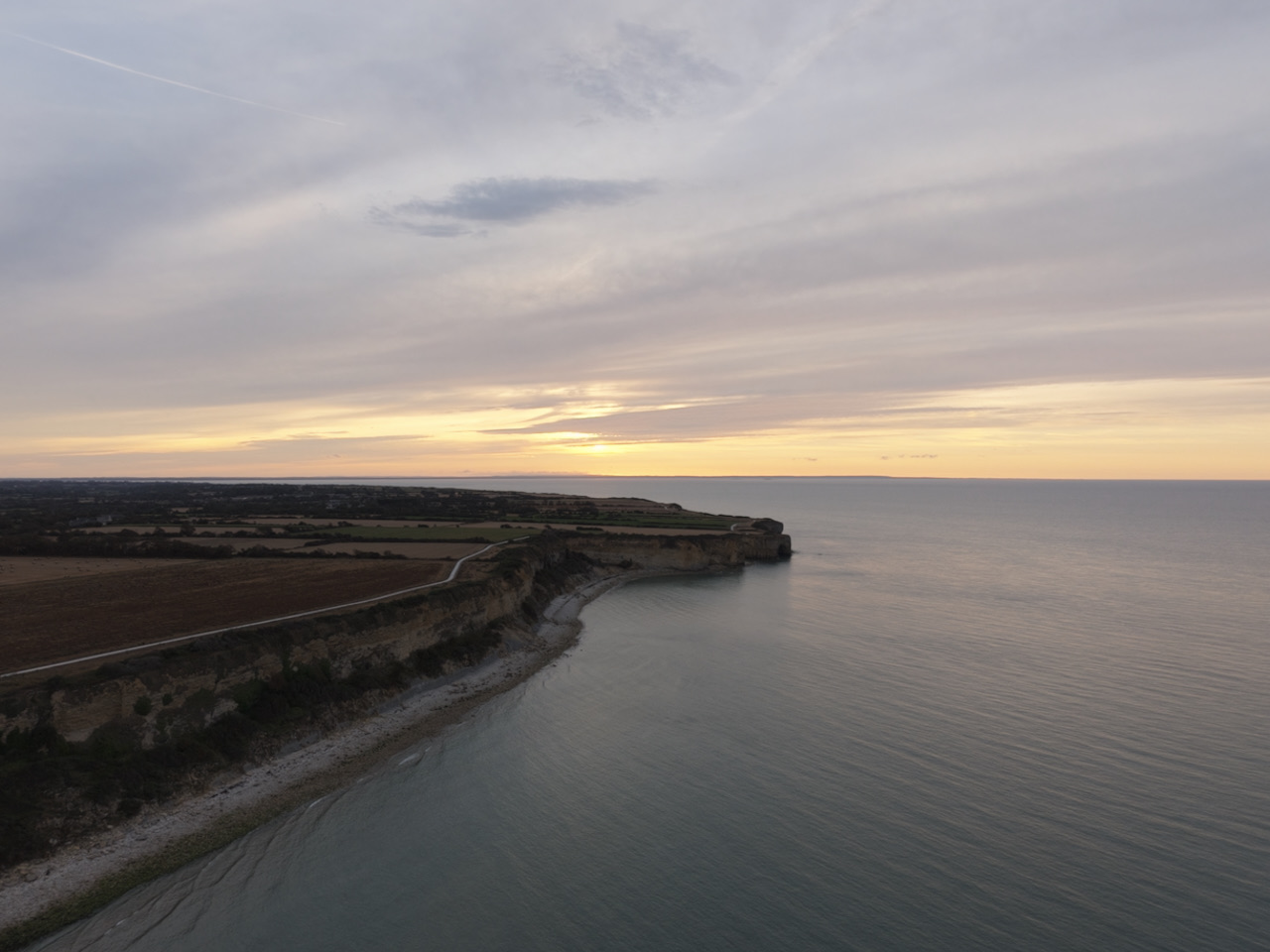
03The Atlantic Wall under blue skies.
At Longues-sur-Mer, several guns still stand in their casemates. The massive concrete structures are imposing on their own. With the surviving barrels pointing towards the coast, it becomes easier to understand how the battery once worked.
That contrast again: green meadows, blue sky, the sea — and an enormous Second World War concrete structure in the middle. I could probably have studied it for hours. Understandably, the family eventually had other plans.
History beyond the glass. Right inside the scene.
Just a few hundred metres from the American cemetery, the Overlord Museum brings the Battle of Normandy together in walk-through scenes. Vehicles, equipment and life-size displays reveal a scale that numbers alone can hardly convey.
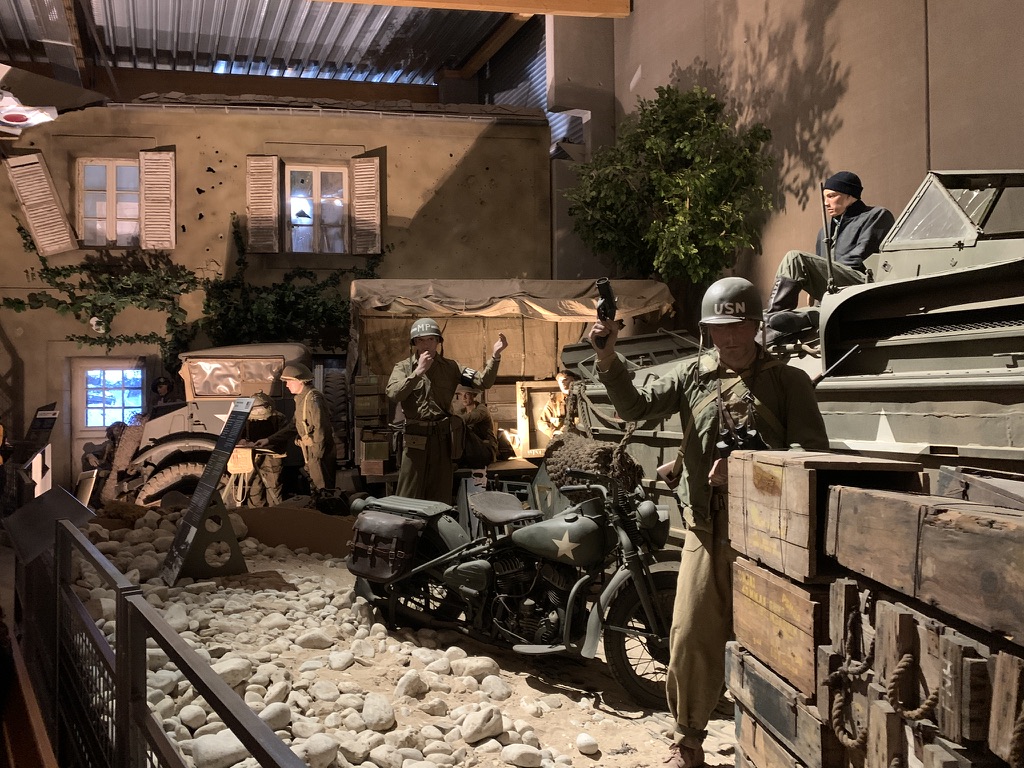


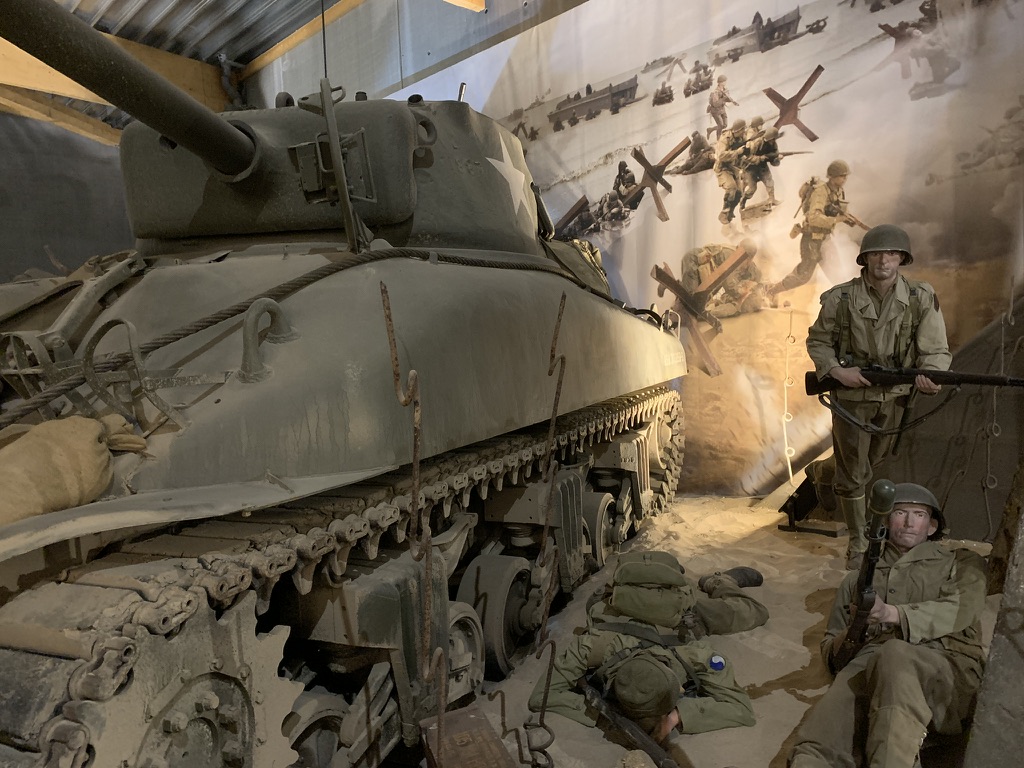
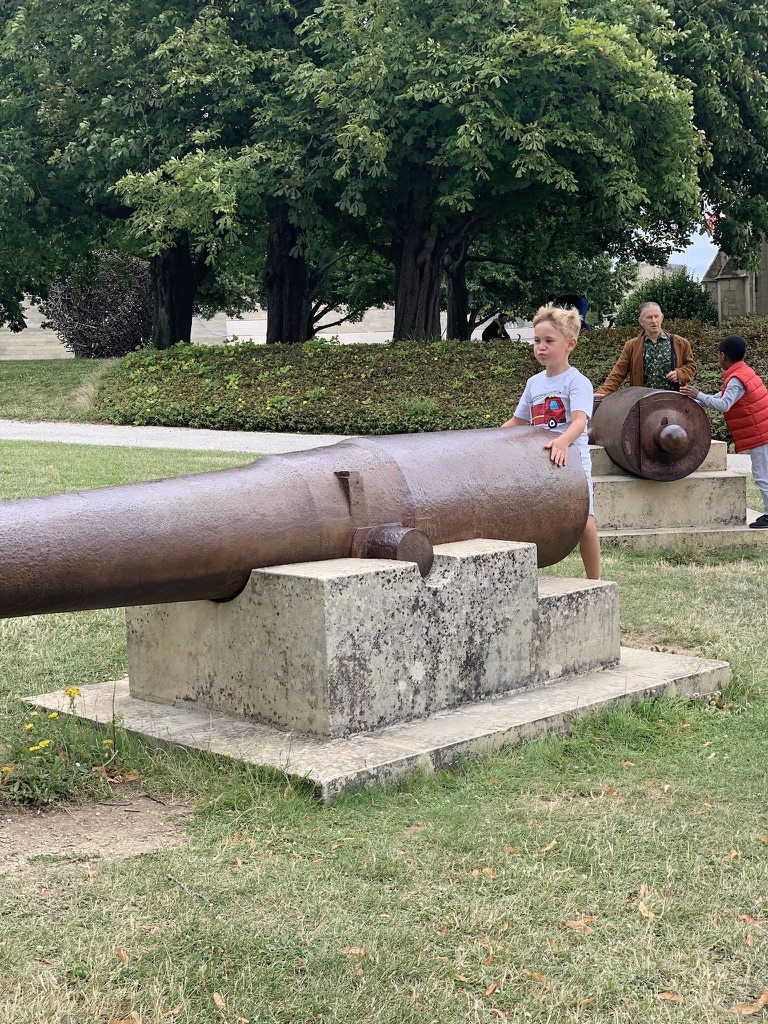
For us, the museum was more than a collection of individual objects. The reconstructions bring vehicles, personal equipment and everyday scenes into a coherent picture. Especially with children, this offers a more accessible approach than text panels alone.
Location: Rond-point d’accès du Cimetière Américain · Lotissement Omaha Center · 14710 Colleville-sur-Mer
A place where you instinctively lower your voice.


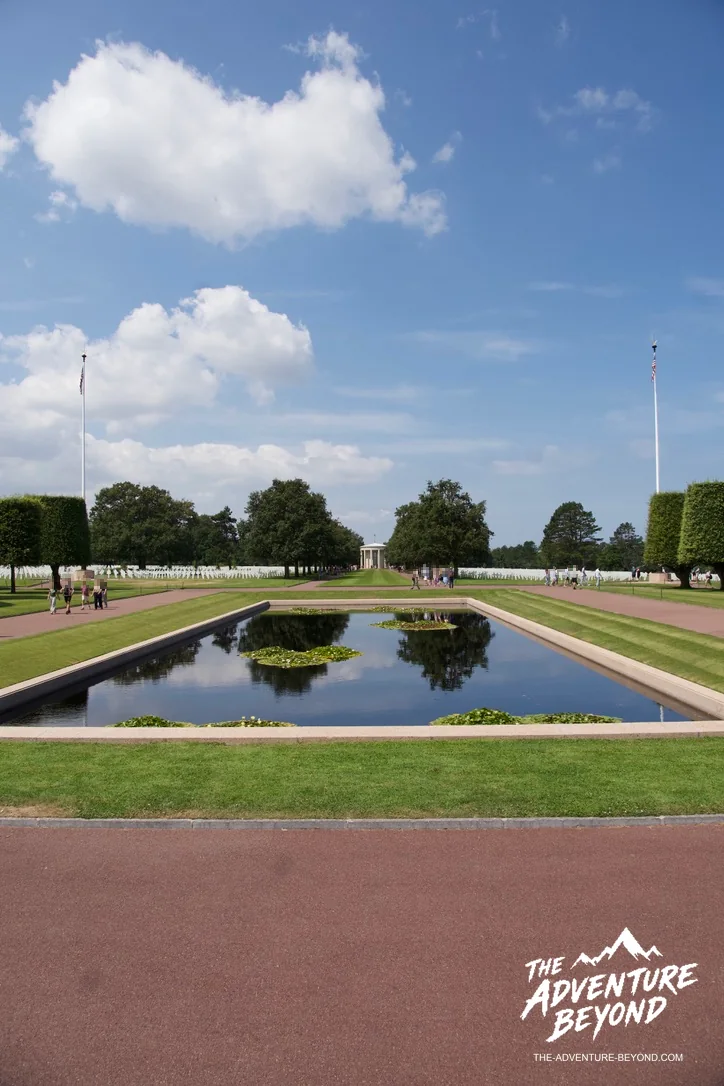
Almost everyone recognises the long rows of white crosses from photographs. In person, there comes a point when you stop seeing rows and start reading individual names, ranks, dates of death and the ages of so many men. Numbers take on a different meaning.
Behind the cemetery lies the sea, with Omaha Beach below. This place needs no grand words. You walk, read and reflect. That is enough.
Quiet, dark, contemplative.
La Cambe tells the same story from another perspective. Among dark stone crosses, flat grave markers and the central burial mound, history becomes a place of silence — restrained, heavy and without spectacle.

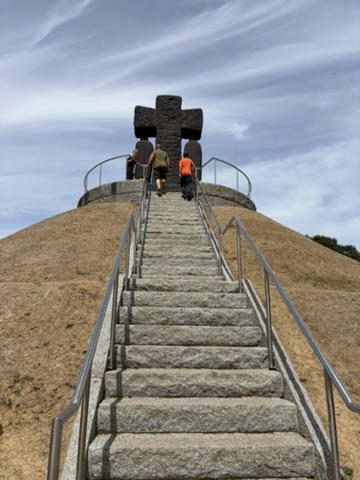
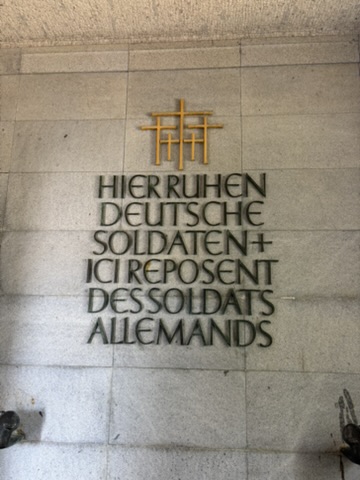
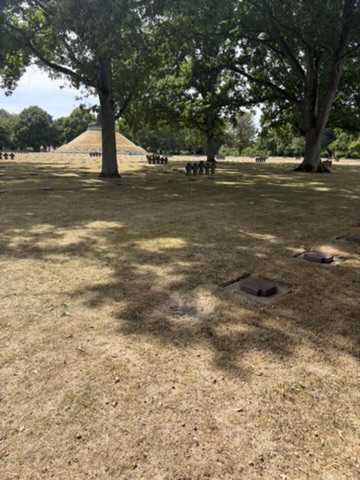
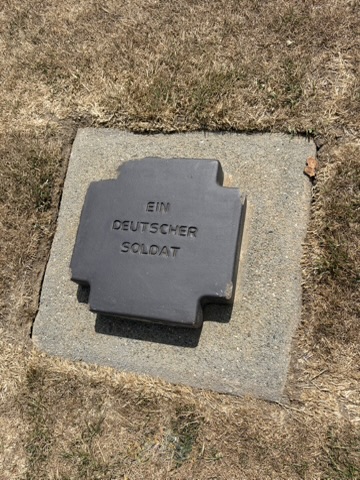
The German cemetery feels far more restrained than the American memorial above Omaha Beach. That contrast makes visiting both so affecting: here, there are no long white rows, but dark stone, thick grass and an almost muted atmosphere.
We walked slowly through the grounds, reading individual names and repeatedly stopping. La Cambe is not a place for quick photographs, but one where the scale of war becomes tangible through personal stories.
History that children can connect with.
Sainte-Mère-Église is closely connected with the American airborne troops who parachuted into Normandy on the night before the landings. Museums, vehicles, uniforms and reconstructed scenes make the scale of the operation more accessible to children than displays behind glass alone.
Tanks, motorcycles, equipment and complete scenes give some idea of the enormous numbers of people and quantities of material brought to Normandy in such a short time. And it does not take much to persuade me to look at a Sherman tank either.
 05
05FIELD BREAK / NOT EVERY DAY NEEDS HISTORY
Sea. Dogs. Family. No plan.
This was never meant to be simply a tour from one battlefield to the next. There were beach days with the children, Winston and Erna — no programme, but plenty of wind, water and time together. Those moments are just as much a part of Normandy.
More than scenery. Our summer.
 06
06A complete change from D-Day.
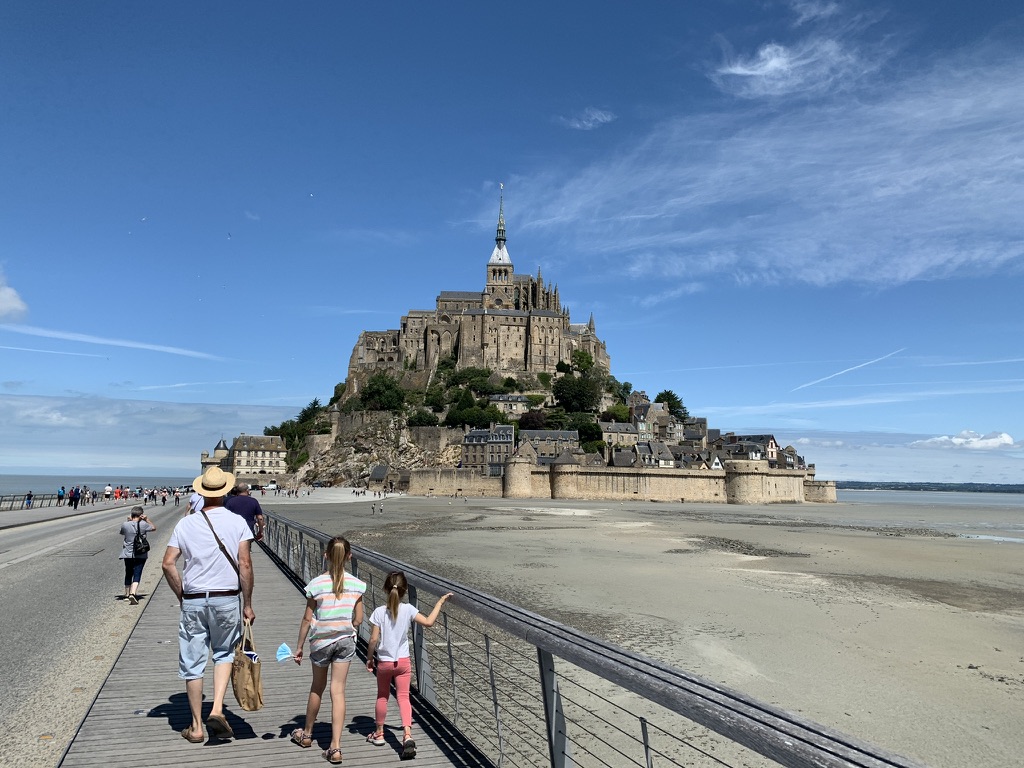
Mont-Saint-Michel had nothing to do with our D-Day tour, which made it the perfect contrast. The rock and abbey rise from the flat landscape and grow larger with every kilometre.
The place is touristy — very touristy. Yet I would visit again. After so many Second World War sites, this day took us several centuries further back, across the walkway, through narrow streets and up to the abbey above the vast bay.
Route Extensions · Calvados
Three stops. More depth.

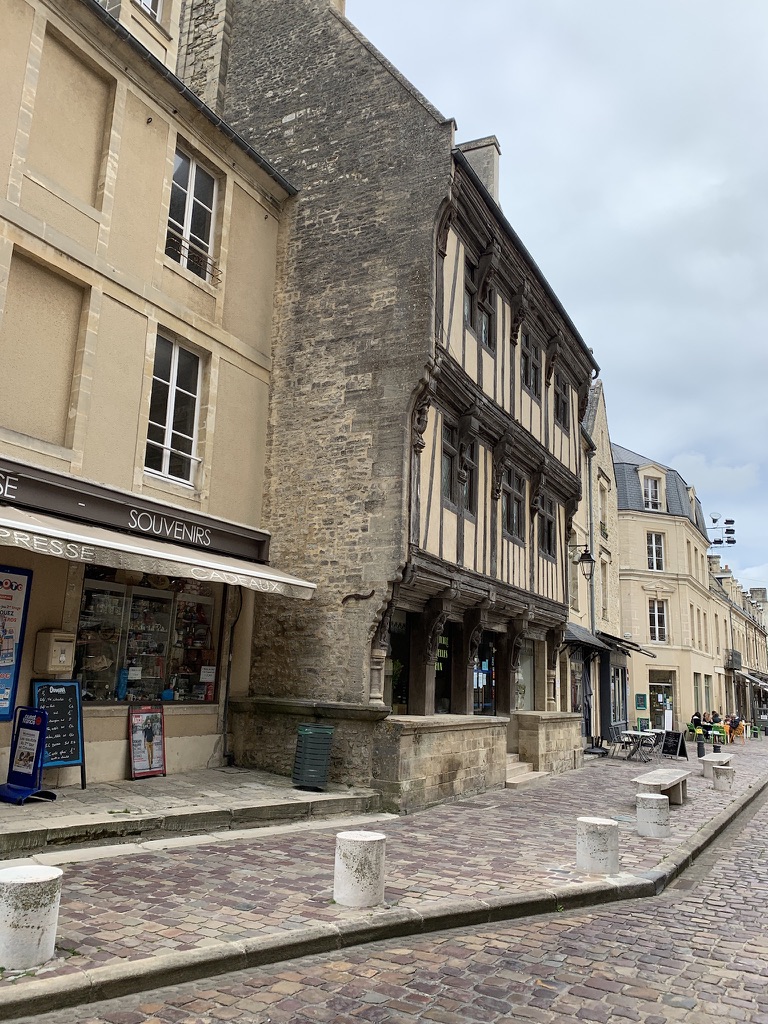
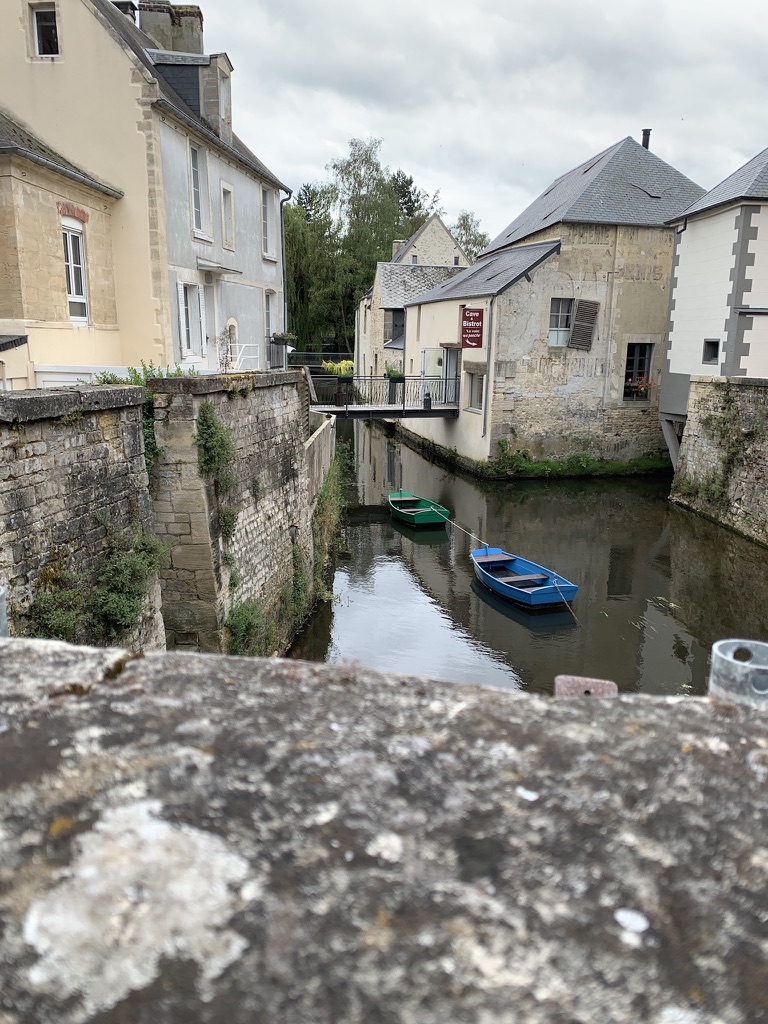
Between the old town, the Aure and coastal history.
Bayeux brought a quieter rhythm to the route: historic streets, old mills beside the River Aure and a townscape where the region’s history is present far beyond the museums.

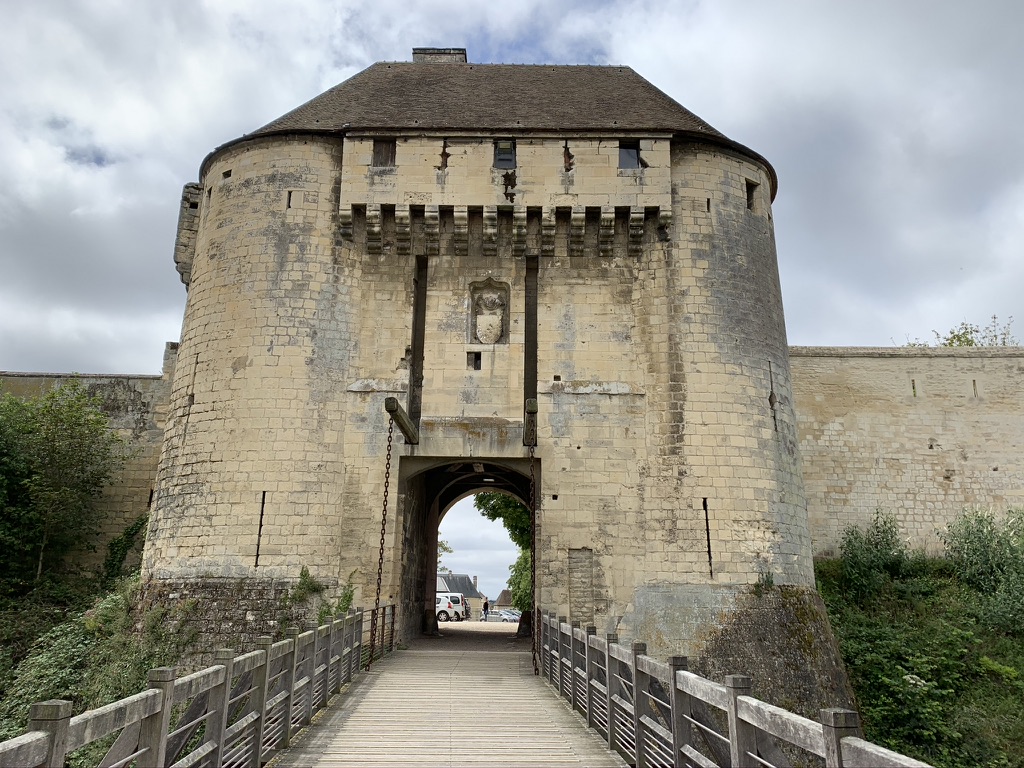
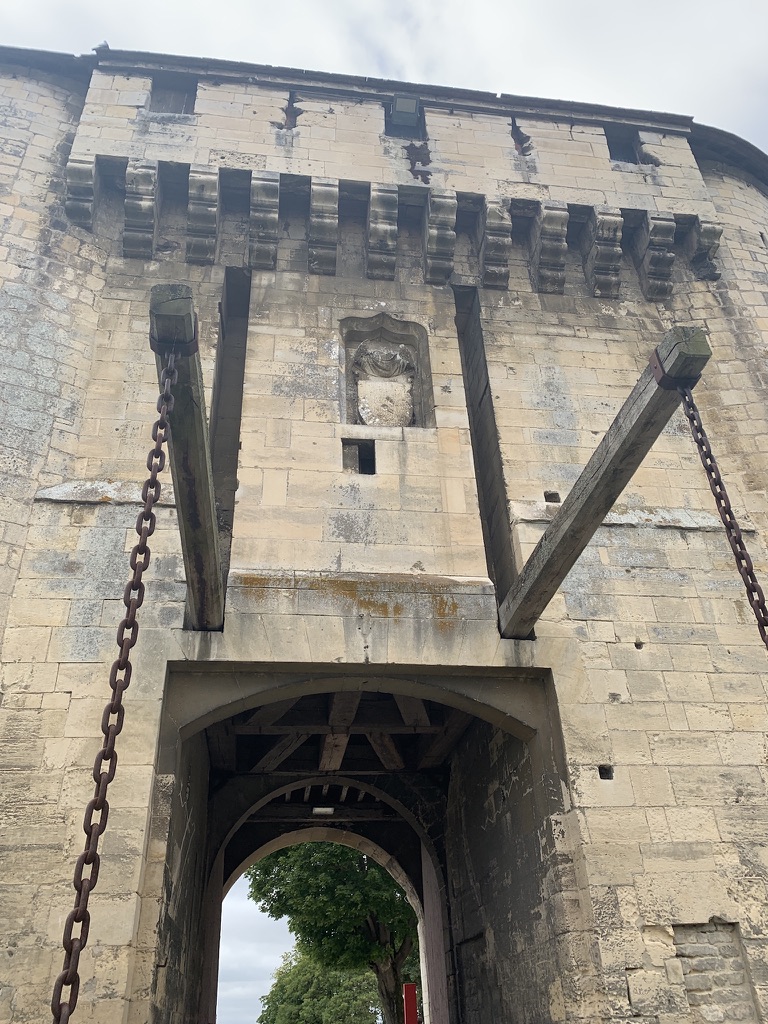
Abbey, walls and urban history.
Caen adds the Abbaye aux Hommes, medieval fortifications and a lively centre to the beaches and coastal batteries. After the open coast, the city feels like a deliberate change of perspective.
Quiet, dark, contemplative.
La Cambe German military cemetery provides a restrained counterpoint to the American memorials. The map marker leads directly to the full photo essay.
Field Guide · Normandy
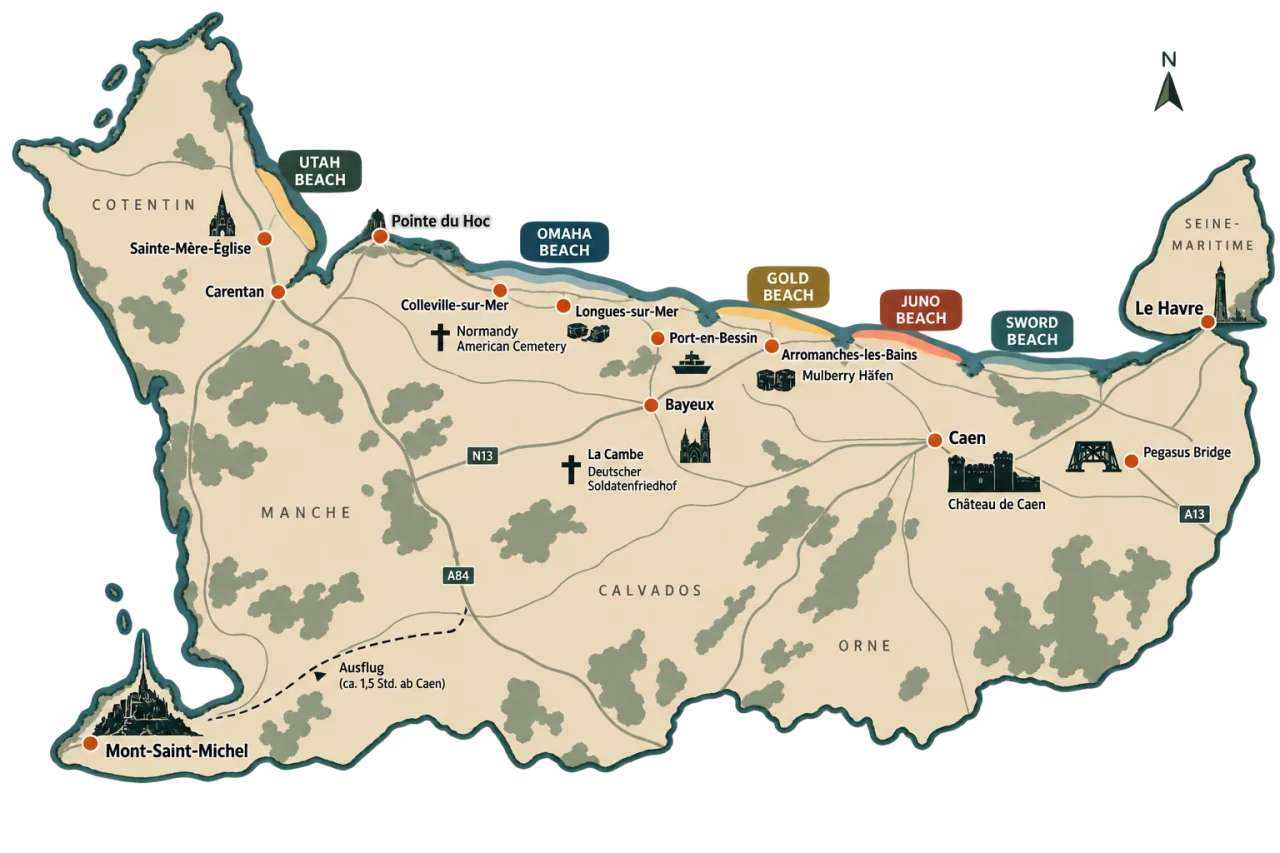
Normandy Adventure Map Ten places · One journey
Choose a marker. Each point opens a single illustrated travel panel; selecting another marker automatically closes the previous one.