
 ← All stories
ARCHIVE FILE · Lost Places
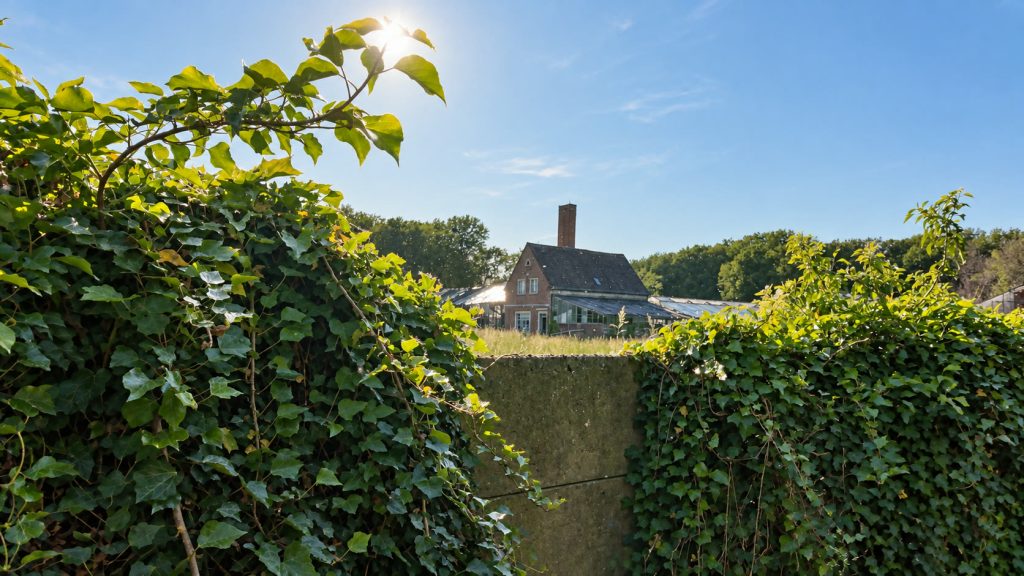
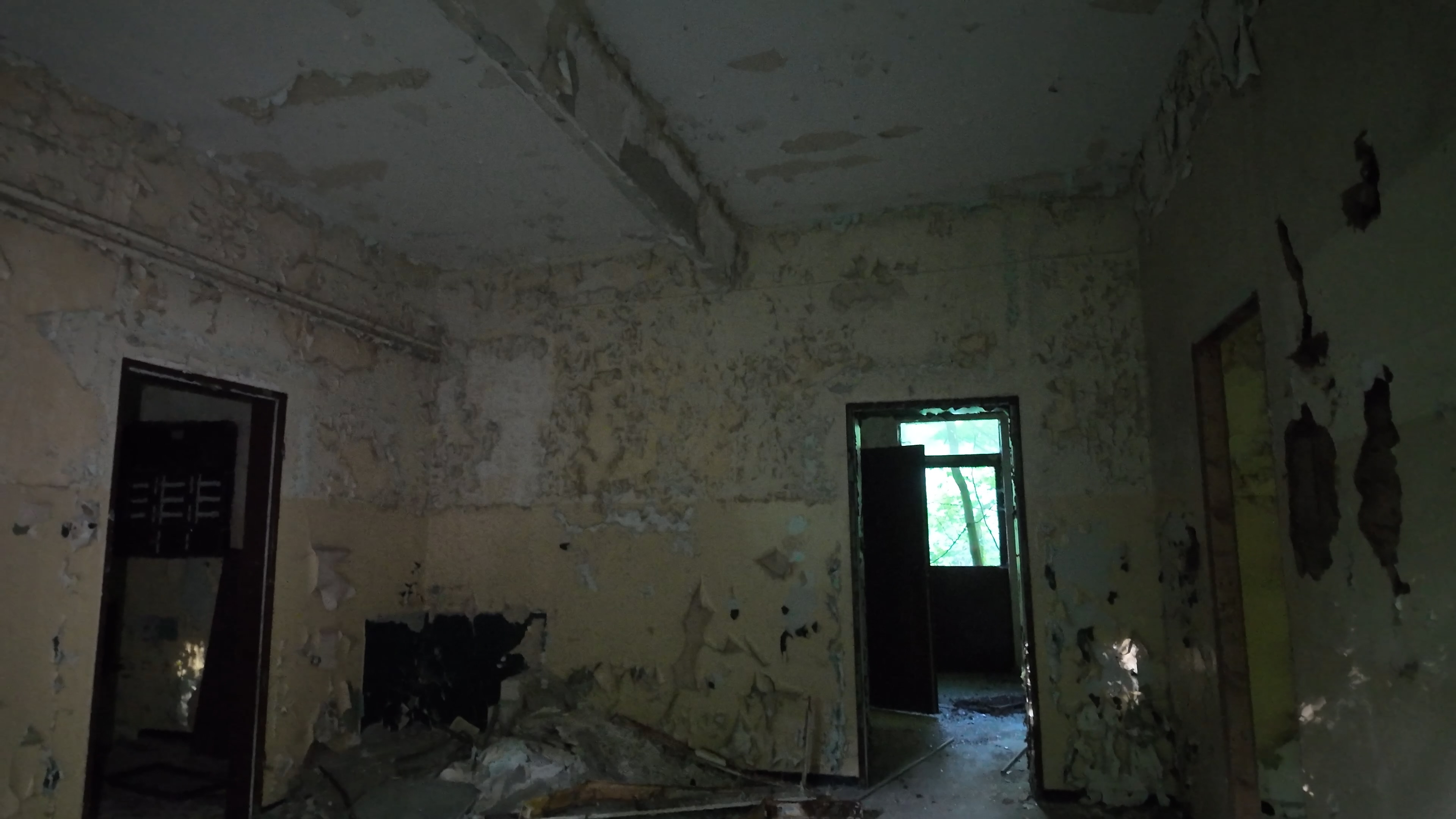
What interests me about abandoned places is what happens when nobody looks after them anymore. How a house falls apart, how plants grow through the windows, and what you can still make out of the life that used to be there. The thrill is part of it for me too. That feeling of doing something forbidden. But is it actually forbidden? It is worth looking at that more closely.
This article is about German law and decisions by German courts. It does not describe the rules in the Netherlands, Belgium or other countries.
01 / FIELD NOTE
What draws you to abandoned places?
“That sense of something lost, and seeing the decay progress when people stop looking after a place. And of course the feeling of doing something forbidden — the thrill of it.”
Florian
02 / FIELD NOTE
So it is about more than crumbling buildings?
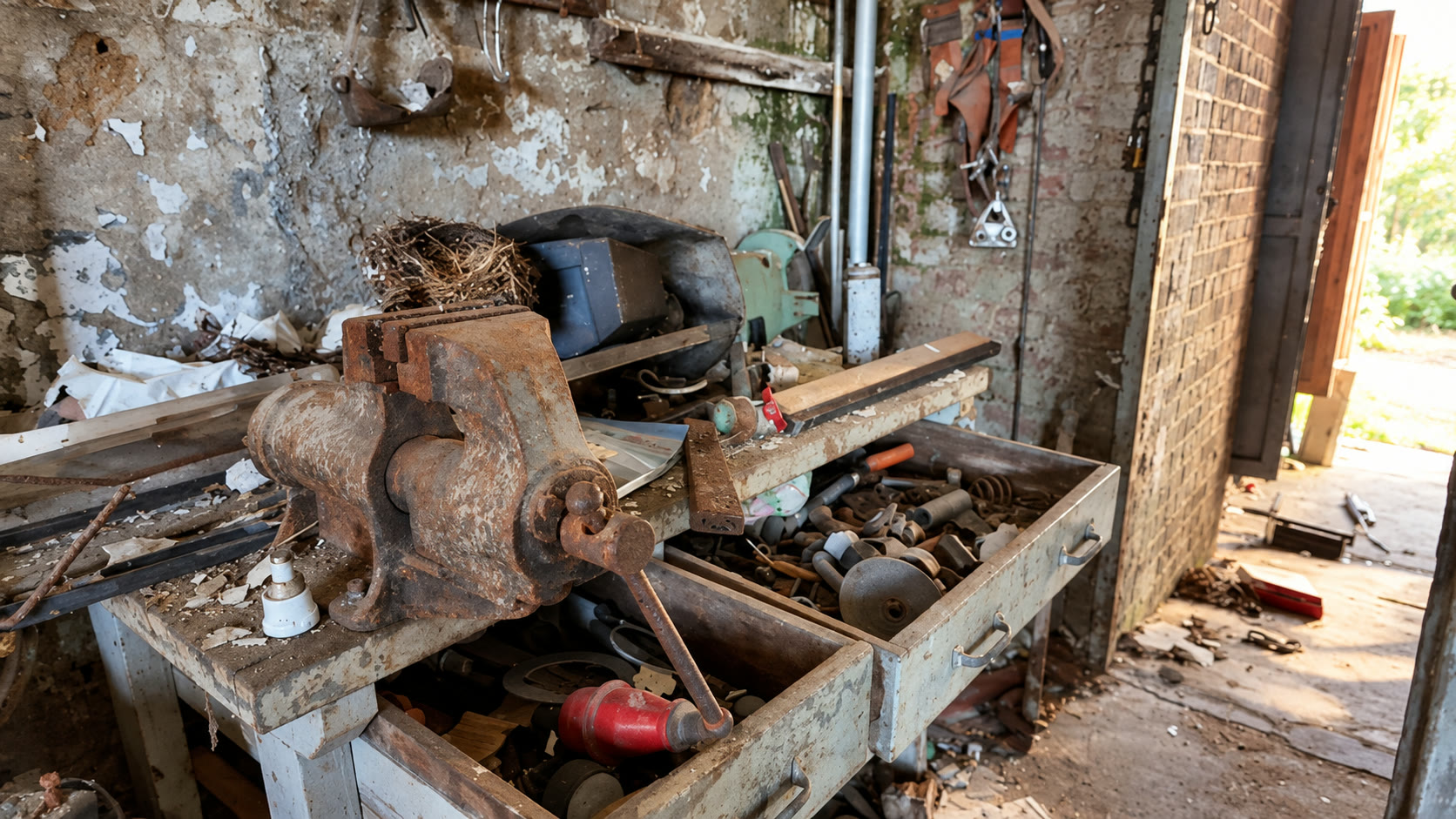
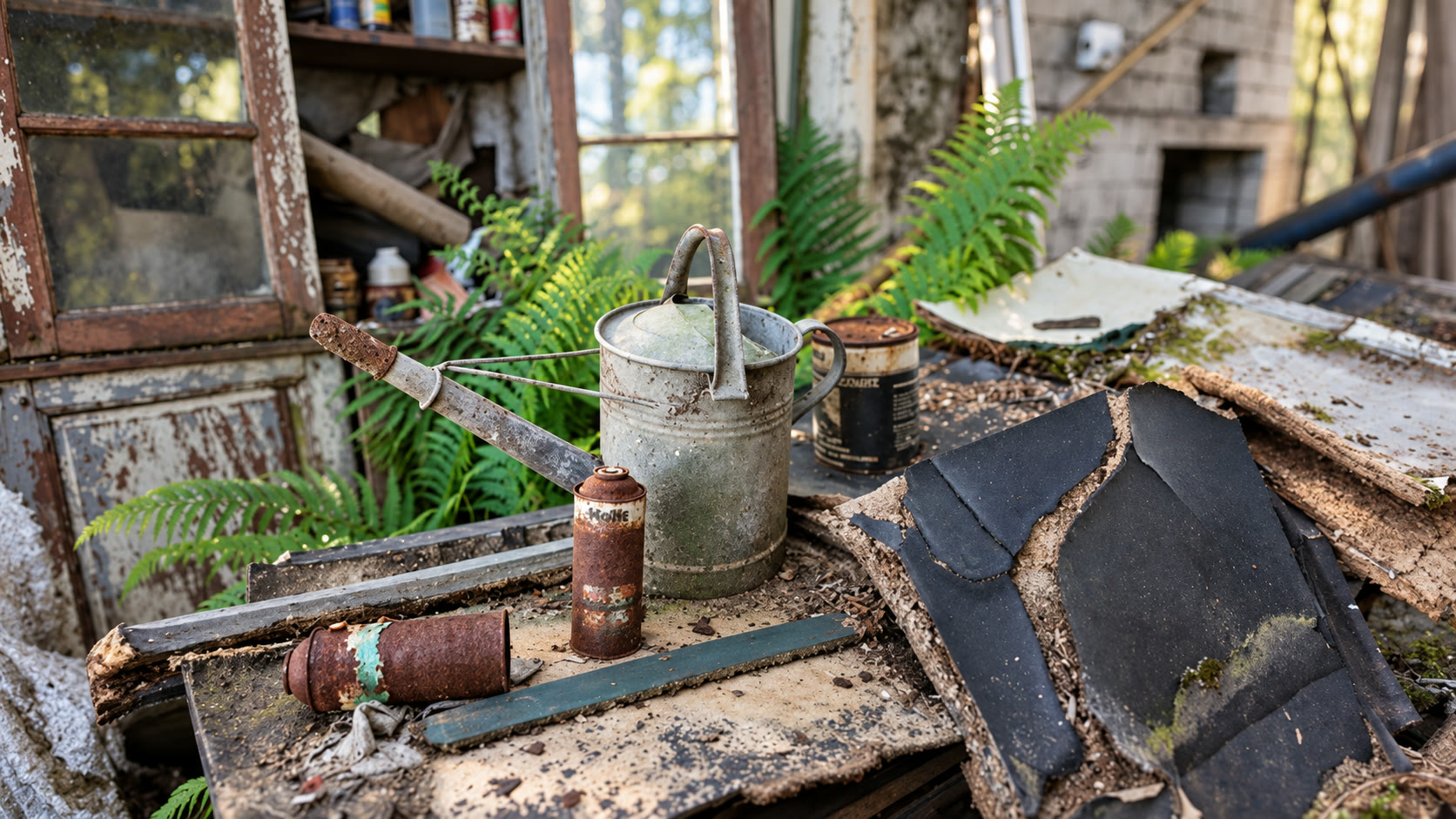
Yes. In an empty building, you soon start wondering what it used to look like. Who worked or lived here? Why did people stop coming? Sometimes a small object catches your attention more than the building itself. Like the watering can among the ferns at the old nursery. It is still there while everything around it grows wild.
You cannot tell what really happened just by looking at a room, though. Furniture left behind does not mean someone had to flee in a hurry. Much of the story remains unknown at first. That is when it helps to look for old photographs or records about the place, rather than inventing a story to fit the picture.
03 / FIELD NOTE
What about the thrill of doing something forbidden?
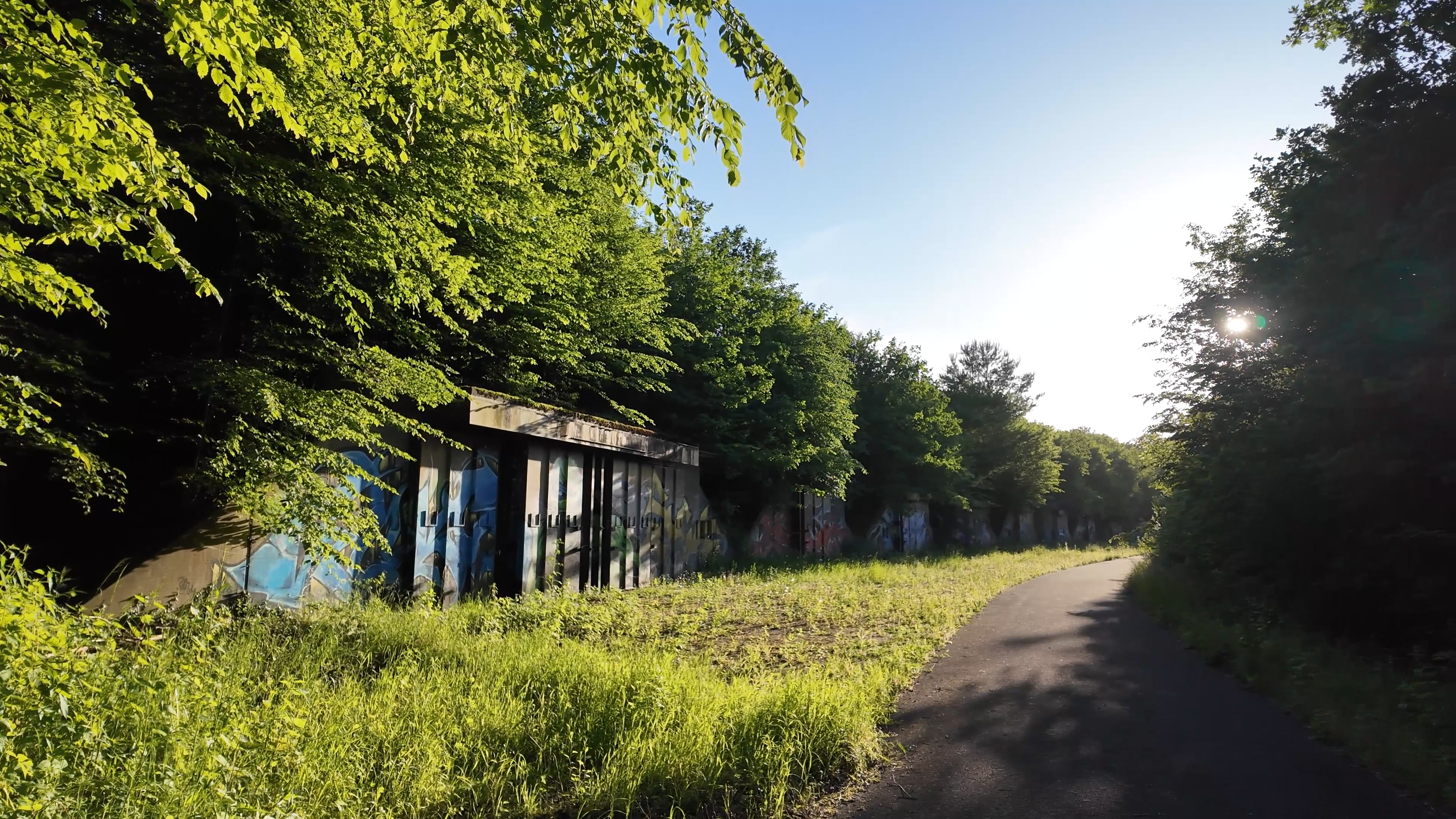
Some of it comes from not knowing what to expect. You do not know what is behind the next door, or how much of a building is still there. Then there is the feeling of being somewhere you would not normally get to see.
You still need to find out beforehand whether you are allowed to visit. A place can be fascinating even with permission. And a site that is easy to walk into may still be off limits. Easy access tells you very little about that.
04 / FIELD NOTE
Is visiting abandoned places legal in Germany?
Looking at or photographing abandoned places is not prohibited across the board. What matters is where you go and on what terms. Sites open to the public, areas officially opened to visitors, or valid permission can make a visit lawful. But calling somewhere a “lost place” does not give anyone a right of access.
A neglected property will usually still have an owner. As a rule, owners can exclude others from using it, subject to the law and the rights of third parties. Possession is protected too. So even where an act is not a criminal offence, civil claims may still arise. § 903 BGB and § 858 BGB are important legal bases for this.
Even after years of standing empty, the property will normally still belong to someone. Giving up ownership of land in Germany requires a declaration to the land registry and an entry in the register. Visible neglect is not enough. § 928 BGB.
05 / FIELD NOTE
When does it become criminal trespass?
§ 123 StGB of the German Criminal Code protects, among other places, homes, business premises and what German law calls befriedetes Besitztum: typically land visibly enclosed, for example by fencing. Entering without authorisation may be a criminal offence. So may remaining there without authorisation and refusing a lawful request to leave.
You do not have to break a lock or take anything for that to apply. But not every piece of private, undeveloped land automatically falls within this provision. With a long-abandoned ruin, it also matters whether the rooms or grounds still qualify for statutory protection. You cannot decide that simply from how deserted a place looks in a photograph.
06 / FIELD NOTE
What if the gate is open or there is no sign?
An open gate is not an invitation. Nor does a gap in a fence automatically mean the site has lost its legal protection. Conversely, a prohibition sign alone does not make an open area physically enclosed. This distinction is discussed by the Cologne Higher Regional Court (OLG Köln) in its judgment of 24 March 2026, 1 ORs 241/25, paragraphs 40–41.
“I could just walk in” is therefore not a reliable justification. Even if a particular case does not amount to criminal trespass, that does not automatically mean the owner has to tolerate your visit.
07 / FIELD NOTE
How do you get permission?
Before entering, find out who is entitled to decide about access and ask them. That may be the owner, but depending on the circumstances it could also be an authorised tenant, leaseholder or operator. Another visitor saying “everyone goes in here” does not settle it.
Written permission is useful: agree on the date, the areas you may enter, and whether photography and publication on a website or social media are included. Permission to look around does not necessarily cover every use. It does not override official closures or nature protection rules either. If access remains unclear, photograph from somewhere you are allowed to be, join an official tour or choose another place.
08 / FIELD NOTE
“I only take photographs and leave everything behind” — is that enough?
No. That does not settle whether you are allowed to enter. Anyone who damages a door, breaks a window or destroys something for a photo may be liable for criminal damage under section 303 of the German Criminal Code (StGB) .
Things lying around are not automatically free to take either. For ownership of a movable object to be abandoned, its owner must intend to give it up. Taking someone else's belongings with the intention of unlawfully appropriating them for yourself or another person can amount to theft. “It had been sitting there for years” does not answer that question. The relevant provisions are § 959 BGB and § 242 StGB.
09 / FIELD NOTE
Can you publish your photographs afterwards?
That needs to be considered separately from access. The freedom of panorama provision in section 59 of the German Copyright Act (UrhG) allows, under its conditions, images of works permanently situated at public roads, paths or squares; for buildings, it covers the exterior view. It does not give you a right to enter private land or a building to take a picture.
For photographs taken from within the property, ownership rights and agreed conditions of use may also matter, particularly for commercial use. This is illustrated by the German Federal Court of Justice (BGH) decisions on photographs of palaces and gardens, here case V ZR 14/12. If you are preparing an article, it therefore makes sense to agree explicitly on the intended publication too.
And not everything you can photograph belongs online: private letters, medical records or clearly legible personal details, for example. Publishing images of identifiable people generally requires consent under section 22 of Germany's Art Copyright Act (Kunsturhebergesetz); § 23 sets out exceptions and their limits. You can often frame a photograph differently or obscure details so that it tells the story of a place without exposing someone's private life.
10 / FIELD NOTE
Isn't the building itself often the biggest danger?
A derelict building remains dangerous even if you have permission. You cannot reliably judge by sight whether a floor will hold or a tunnel has enough oxygen. Following an incident at a tunnel in July 2026, the Olpe police warned about collapse risks, shafts and oxygen deficiency. Source: Olpe district police authority, 15 July 2026.
A helmet, gloves and a torch will not fix a rotten floor. Underground areas or places at risk of collapse are not somewhere to explore on your own initiative. If the authorities have closed a site, stay out. If getting the shot means taking that kind of risk, leave the photograph untaken.
11 / FIELD NOTE
What if nature has moved back in?
Old cellars and tunnels in particular can serve as winter roosts for bats. For caves, tunnels, underground cellars and similar spaces used in this way, section 39(6) of Germany's Federal Nature Conservation Act prohibits visits from 1 October to 31 March. The law provides limited exceptions and excludes areas developed for tourism or heavily used. This is not a blanket winter ban on entering every empty house. Other species protection rules, including section 44, may apply independently. German Federal Nature Conservation Act, especially sections 39 and 44.
The owner's permission does not override these rules. If it is unclear whether animals use the site as a refuge, involve the relevant nature conservation authority.
12 / FIELD NOTE
Does permission take away the appeal?
It does not change the place itself. The rooms are still there, the plants keep growing and the questions about its past remain. What mainly disappears is the uncertainty about whether you are allowed to be there at all.
You do not need to rearrange anything for a photograph or invent a ghost story for an article. Leave private documents where they are and do not put their contents online. Think carefully about publishing exact locations too, and what it might lead to. That is a decision about protecting the place and the people involved, not a general legal ban on naming an abandoned site.
The decay itself raises enough questions. You do not have to add anything to find a place like this interesting.
This article concerns German law and German court decisions, as of 27 October 2026. Get legal advice for a specific dispute. Different rules apply to visits outside Germany.