
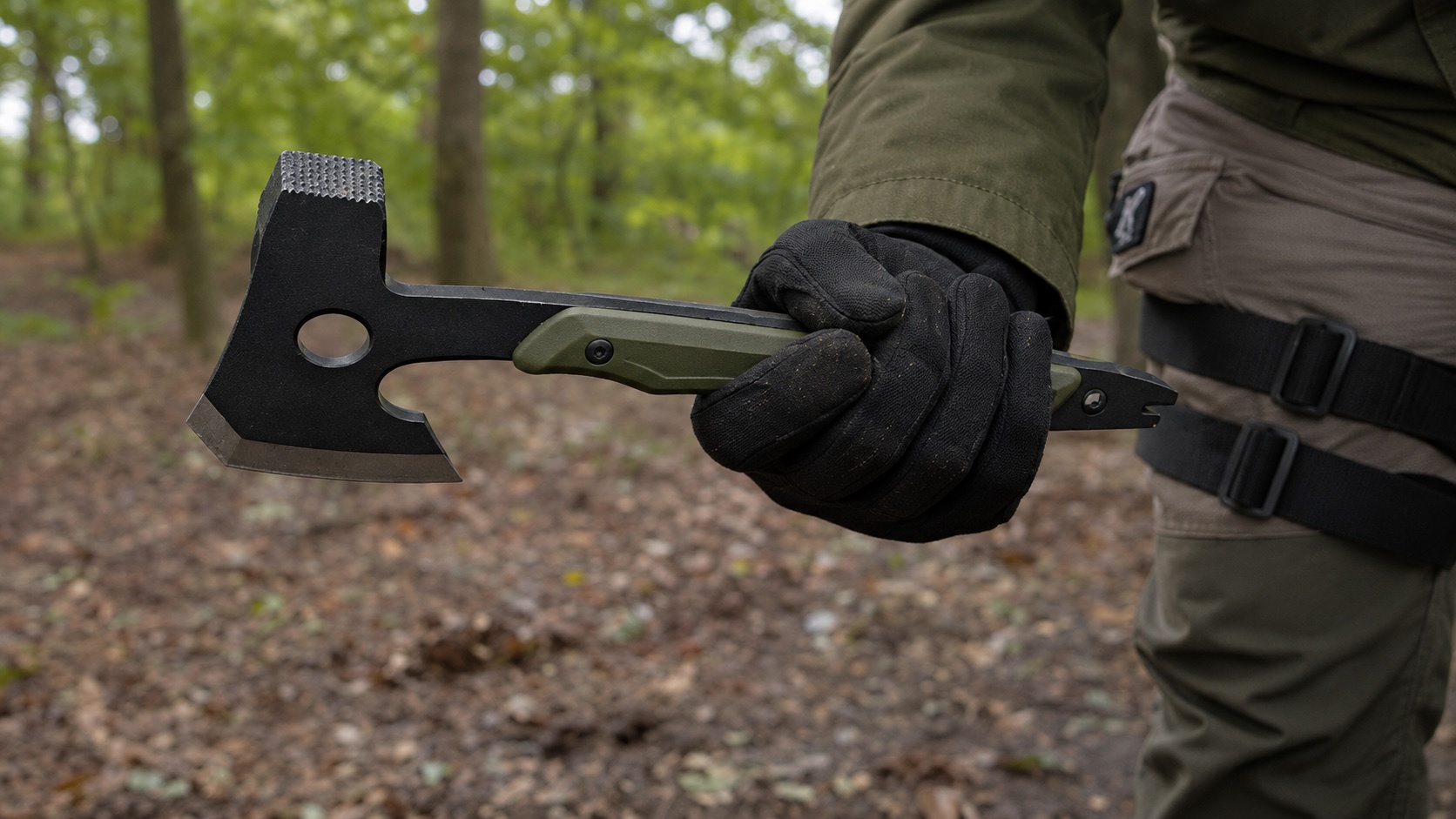
The cutting edge and the textured striking face share the same head. There’s a small nail puller at the end of the handle.
What the A1 can do on wood
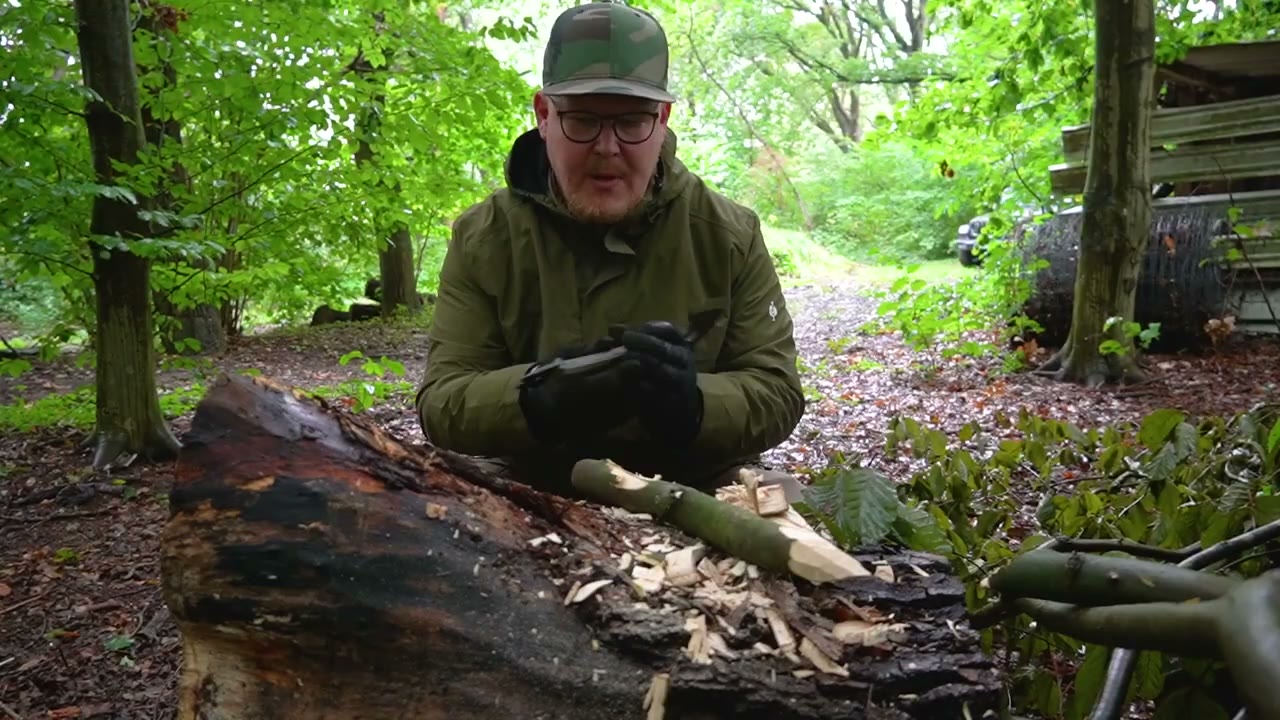
On the log in front of me are a branch and a pile of pale wood chips. That’s the sort of job I bring a hatchet for. The Otacle A1 has a hammer on the back of the head. The end of the handle doubles as a small pry bar and nail puller.
The first few blows take visible chips off the branch as I shorten it. The edge bites well into this piece of wood. A hatchet like this is enough for kindling and small jobs around camp. For a stack of thick logs, I’d pack a splitting axe.
A hammer comes in handy around camp
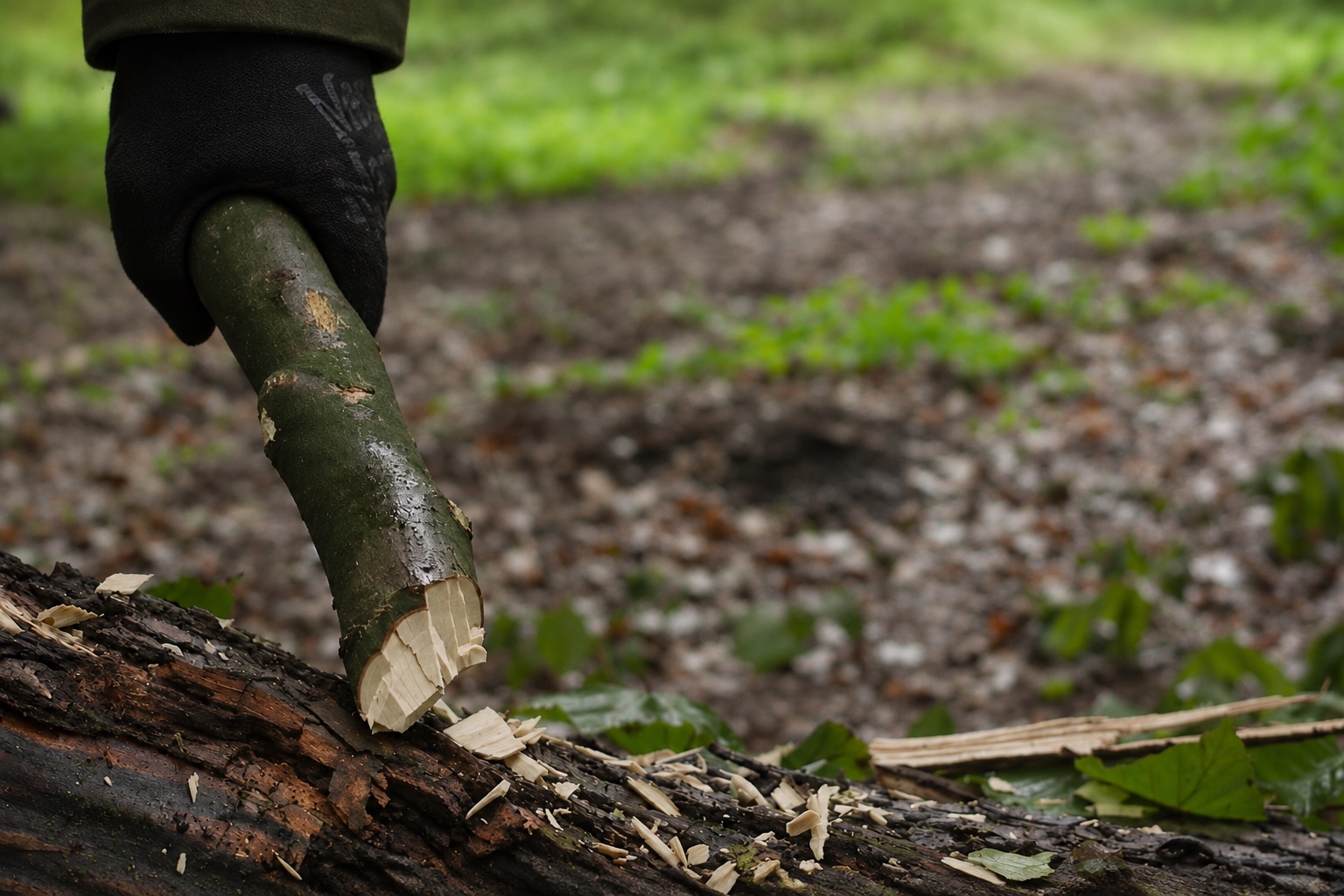
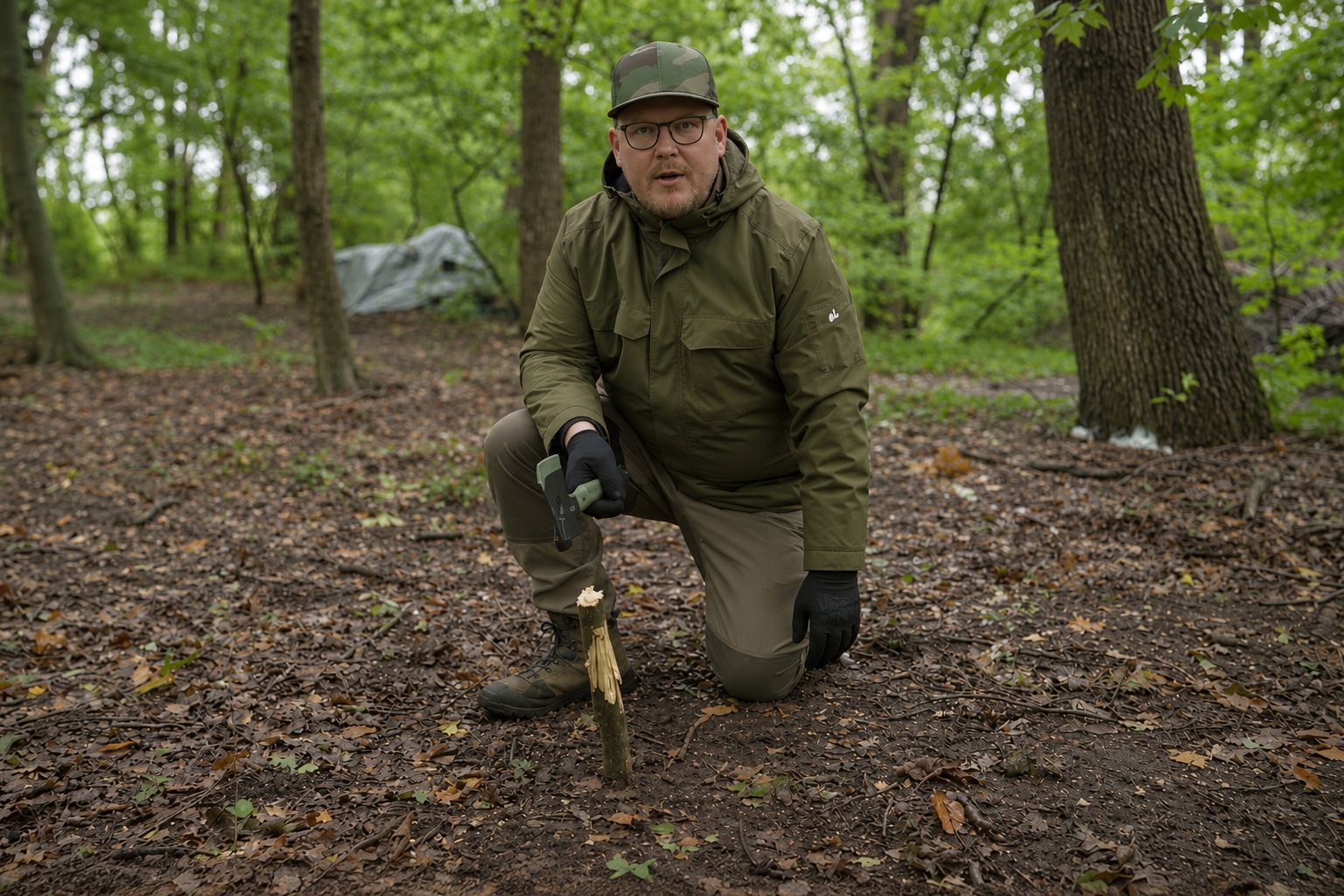
I tried the hammer face on a wooden stake. That side of the hatchet is handy for driving in a stake or tent peg at camp. I’d leave the sheath over the blade while hammering, provided it leaves the striking face clear. The little nail puller is a bonus for the odd job.
Why I keep the sheath on hand
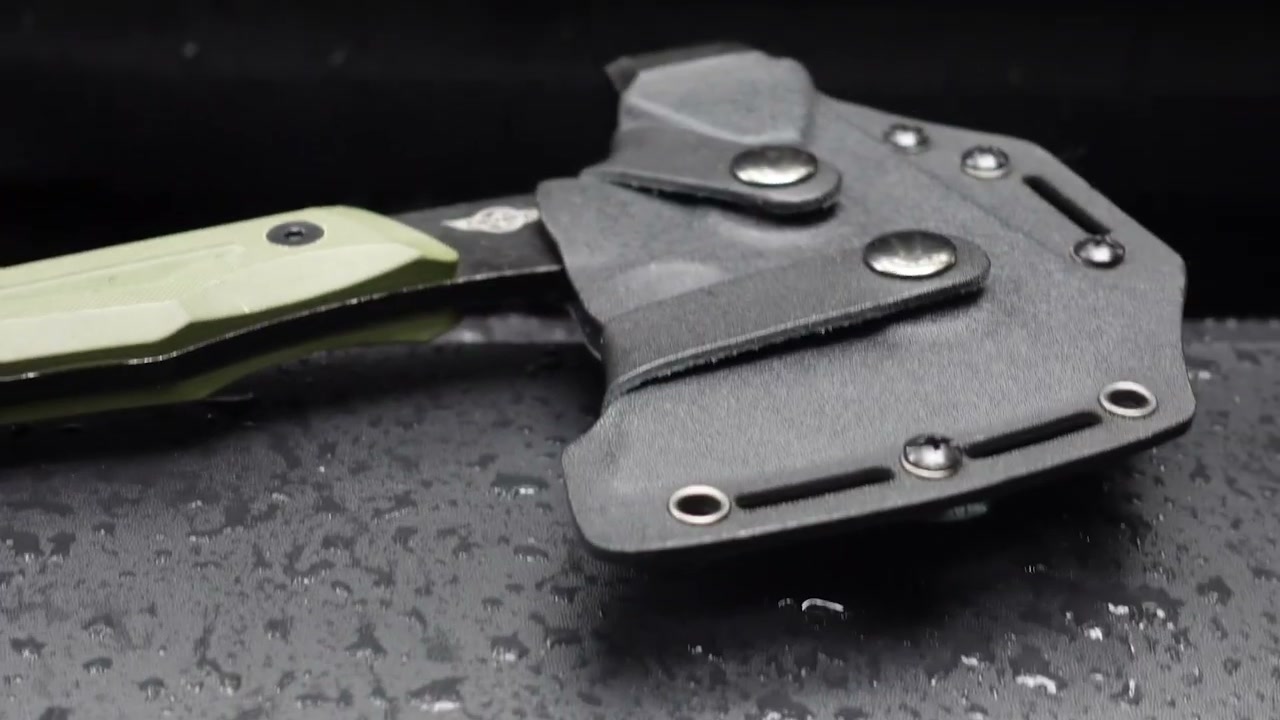
The textured G10 handle scales gave me a good grip with gloves on. For carrying, the head sits in a Kydex sheath with a belt mount. On my belt, the hatchet is within easy reach. At around 735 grams, I’d only take it on a longer hike if I knew I’d need it.
My verdict for the car and the campsite
I can see the A1 earning a place in my camping box. It does the job on smaller branches, and the hammer face in particular saves me reaching into the tool bag at camp. If you split wood often or count every gram in your pack, you’ll have different priorities.
These are my impressions from using it in the woods. I didn’t systematically test how long the edge stays sharp or how the handle and hammer hold up in wet conditions, frost or with frequent use.