
Wet leaves, my hood pulled low and coffee heating over a wood fire: the Petromax RF33 has to earn its place outdoors. The rocket stove delivers plenty of heat and suits a Jeep camp well. Its weight and temperature control also set clear limits.
Coffee in November weather
On 27 November 2024, I park the Jeep in an autumn woodland. It is wet and windy, and the weather is hardly inviting. The RF33 stands in front of the vehicle, with the coffee maker on its cooking surface. I do not need an elaborate menu for this test: heat some water, make a warm coffee and see how the stove handles.
Dry wood in, light it, then keep it fed. The RF33 needs neither electricity nor a gas cartridge. I do need to tend the fire and choose a suitable spot for it.
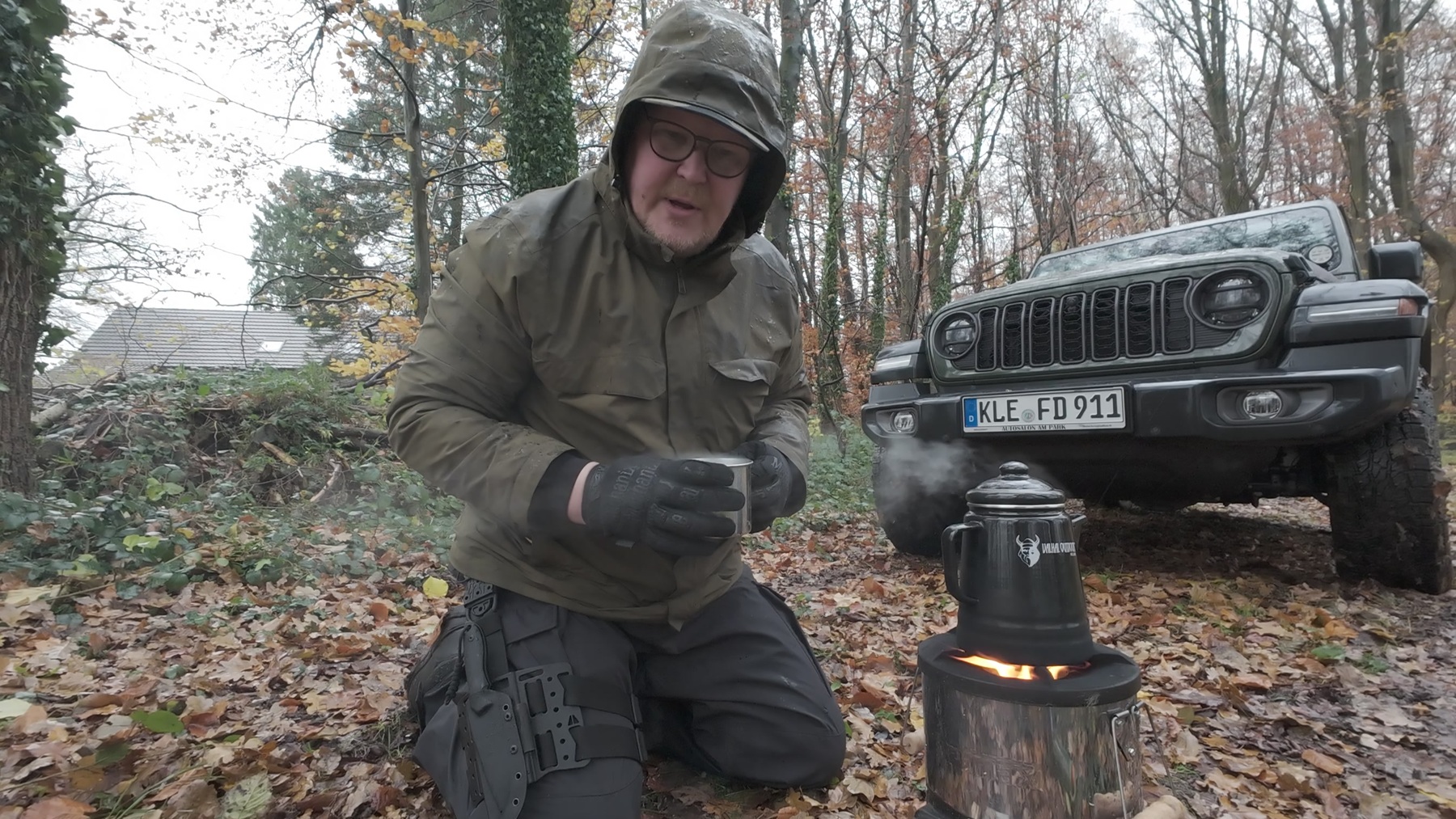
Plenty of heat from a small fire
The rocket stove channels air through a combustion chamber accessed from the side and up towards the cooking surface. This chimney effect is the basic principle behind the RF33. In use, it produces strong heat beneath the coffee maker. With dry fuel, my impression is that the fire burns well and produces relatively little smoke.
Lighting it is straightforward. I like the strong heat for hot water and a small warm meal.
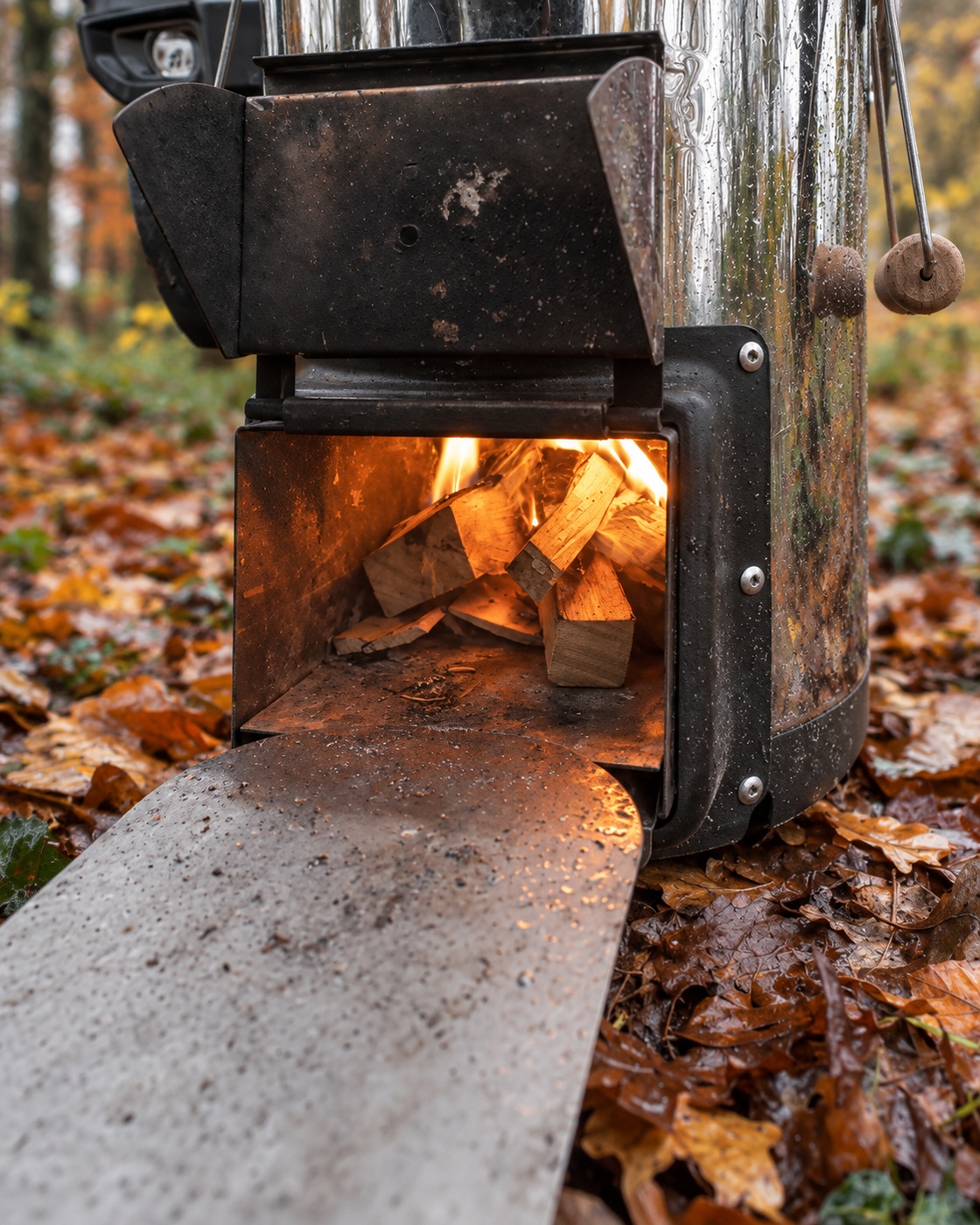
Feeding the fire is part of cooking
The side support helps guide longer pieces of wood into the combustion chamber. I can push the fuel in and keep an eye on the fire. That is easy to manage, but it does not make the RF33 a stove I can simply leave unattended.
Temperature control makes that particularly clear. There is no knob I can turn down to a small flame, as on a gas hob. I can influence the heat through the amount of fuel and the airflow, but the adjustment is less precise. I like that for coffee or quick heating. Dishes that need a long, gentle simmer take more patience and attention.
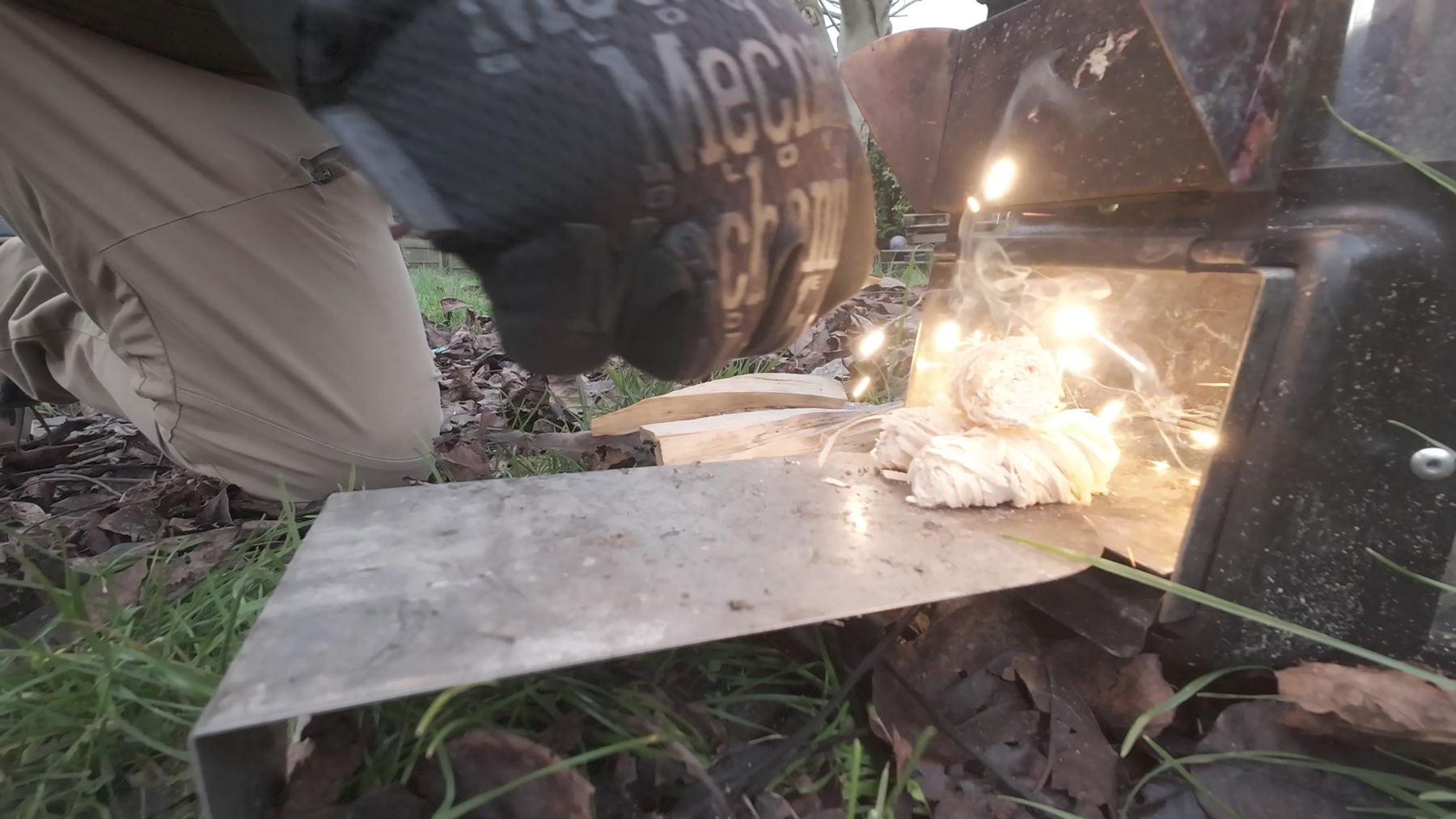
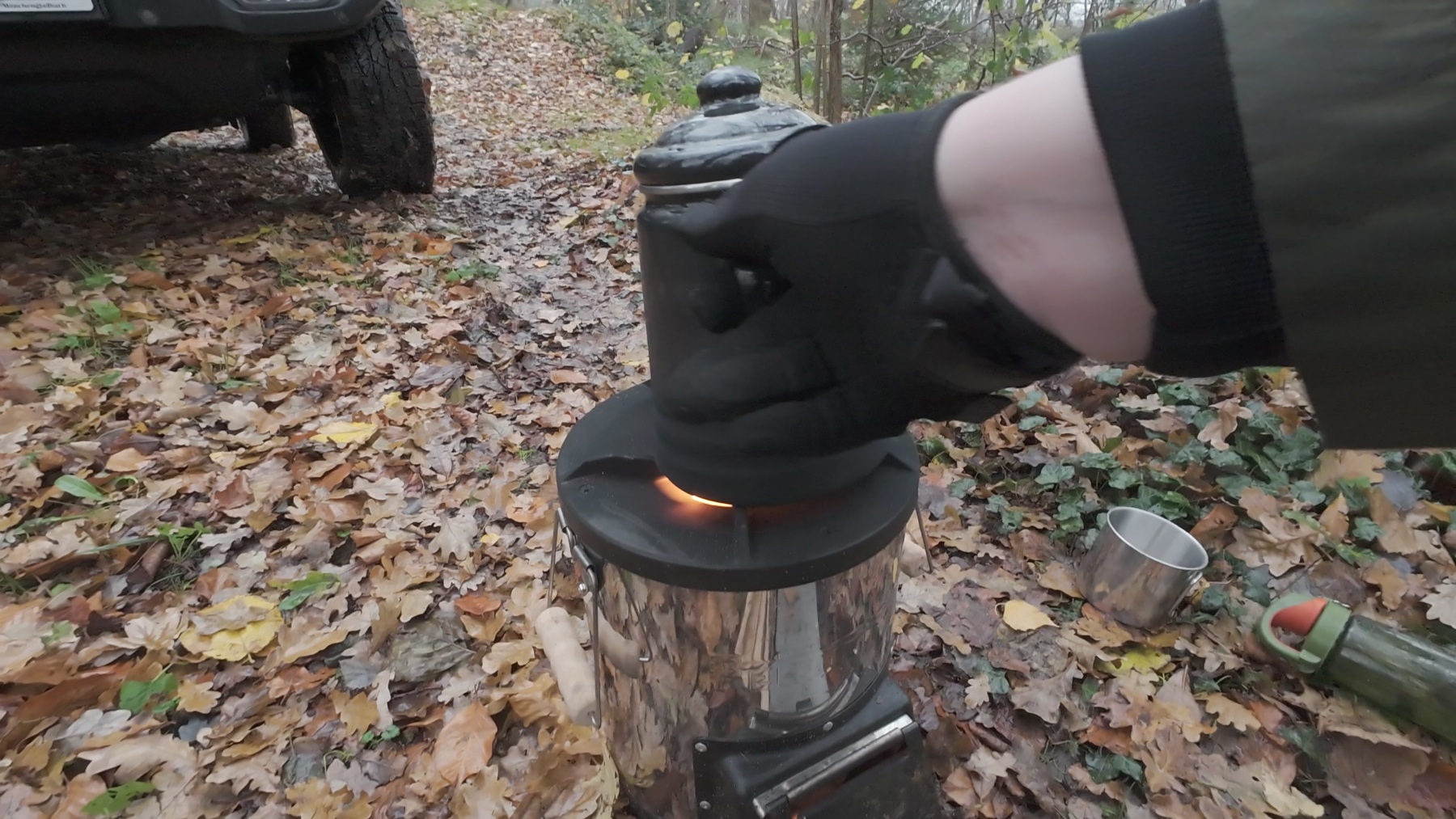
Sturdy enough for camp, heavy enough for the Jeep
For me, the robust construction is a strength. Stainless steel, cast iron and the carrying handles suit a stove that travels with the camping gear. At around 6.5 kilograms, though, the RF33 is no lightweight. That bothers me far less in the Jeep than it would on a walking trip.
That makes its role clear to me: camping with a vehicle, a fixed outdoor spot or a stop where I do not have to carry the stove far. For a backpack, I would choose something else. For simple, rustic cooking with the Jeep, it fits well.
The job is not done after the coffee
A wood fire leaves its mark. After its first use, the RF33 no longer looks as clean as it did out of the box. Removing ash and caring for the cast-iron parts are part of the routine for me. The stove must cool completely before I pack it away.
I put the stove on a stable, non-combustible surface and keep it clear of flammable things. I follow the instructions and local fire rules. The RF33 belongs outdoors, not inside the Jeep or a closed tent.
Pros and cons from my hands-on test
What I like
- Robust construction for transport in a vehicle.
- Strong heat for water and small meals.
- Straightforward operation and fuel feeding.
- Cooking without electricity or gas cartridges.
- Relatively little smoke with dry wood in my test.
What to bear in mind
- Around 6.5 kg is a lot to carry on walking trips.
- Less precise temperature control than a gas hob.
- Wood needs topping up and the fire needs supervision.
- Cooling time, ash removal and cast-iron care are part of the routine.
- Use depends on a safe location and permission to light a fire.
My verdict: A stove for camping with a vehicle
The RF33 suits my camp. The Jeep carries the weight, I tend the fire, and at the end I have a warm cup of coffee in my hand. For me, that's part of being outdoors.
I like it for camping with a vehicle. If you're travelling on foot or want fine control of the heat, you need a different option. For me, its biggest drawbacks are the weight and the coarse temperature control.
Do you prefer cooking with wood or gas when travelling — and what do you need from a stove?
Technical specifications and instructions: Petromax: RF33 rocket stove. Manufacturer specifications checked on 11 October 2026; personal impressions relate to my own use.
Hands-on test: 27 November 2024. Additional detail photographs: 1 December 2024.